CEO at 4DBC Group
The New Frontier: Pioneering 6U CubeSat KSA Missions with KSF Space
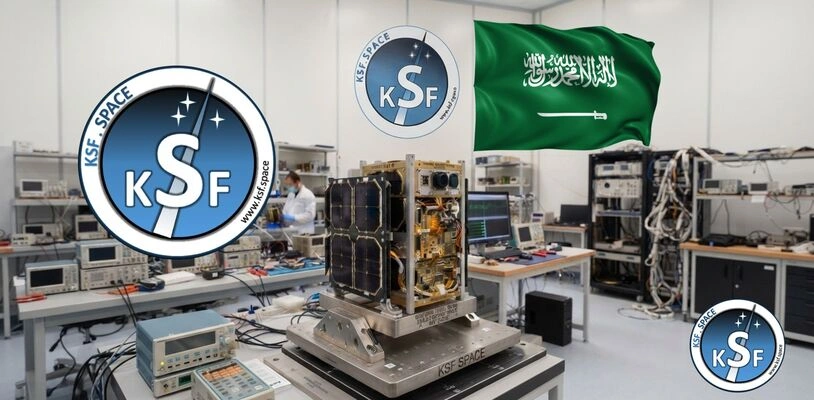
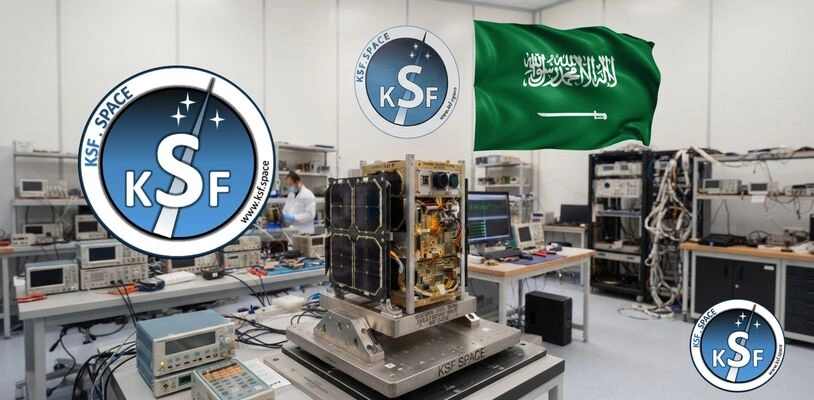
The landscape of modern space exploration is undergoing a profound and irreversible metamorphosis. For decades, the final frontier was the exclusive preserve of superpowers, national space agencies, and multi-billion-dollar aerospace conglomerates. However, the dawn of the “New Space” era has effectively dismantled these barriers, replacing massive, monolithic satellites with agile, high-performance, and rapidly deployable nanosatellite architectures. In the heart of the Middle East, the Kingdom of Saudi Arabia (KSA) is making monumental strides toward achieving its Vision 2030, with a renewed, ambitious focus on aerospace technology, satellite engineering, and regional leadership in space sciences.
At the epicenter of this technological transformation is the 6U CubeSat KSA movement. This paradigm shift enables academic institutions, research centers, and burgeoning aerospace startups to participate in complex orbital missions with unprecedented efficiency and reduced lead times. KSF Space is proud to serve as a primary catalyst in this journey, providing the foundational hardware, flight-proven engineering, and professional educational frameworks necessary to turn Saudi ambitions into concrete orbital realities.
The Strategic Importance of the 6U CubeSat for Saudi Arabia
As Saudi Arabia continues to prioritize the diversification of its national economy under Vision 2030, the aerospace sector has become a cornerstone of technological sovereignty. The 6U CubeSat, a standardized, doubled-up form factor measuring 10cm x 20cm x 30cm, has emerged as the definitive tool for the next generation of space exploration.
Why 6U CubeSats Are the Gold Standard for Universities
For any KSA University or research institute looking to establish a robust, high-capability satellite program, the 6U platform offers the perfect equilibrium between physical size, power generation, and payload capacity.
Increased Payload Volume: Unlike the smaller 3U platform, the 6U format provides significantly more internal volume, allowing for more complex instruments such as multispectral cameras, advanced communication transponders, or even propulsion modules.
Extended Mission Durability: With larger surface area for solar arrays, 6U satellites generate more power, which is critical for continuous data transmission and high-duty-cycle payloads. This makes it an ideal candidate for a Cubesat Saudi Arabia mission focused on continuous Earth monitoring.
Educational Sophistication: The complexity of a 6U mission requires a deeper understanding of systems engineering, which perfectly matches the advanced curricula of a Saudi University aiming to produce world-class aerospace engineers.
Bridging the Skill Gap: KSF Space and Professional STEM Development
The global aerospace industry is currently facing a significant “skills gap.” While the hardware is becoming more accessible, the specialized knowledge required to operate, maintain, and analyze data from Nanosatellite KSA missions remains a bottleneck. KSF Space is uniquely positioned to bridge this chasm through our holistic approach to STEM projects and professional certification.
The NEP Certification: A Global Benchmark
To ensure the sustainability and success of space programs within the Kingdom, we have introduced the Nanosatellite Engineering Professional (NEP) certification. This is not merely an academic course; it is an industry-recognized standard designed to transform students into mission-ready professionals.
By integrating the NEP curriculum into the academic offerings of a Saudi University, the institution provides its students with a distinct competitive advantage in the global market. Key components of this professional development include:
Advanced Mission Architecture: Mastering the lifecycle of a complex 6U mission, from initial concept design to precise orbital injection.
Systems Integration: Deep dives into the core subsystems of a Nanosatellite Saudi Arabia project, including On-Board Computers (OBC), high-efficiency Electrical Power Systems (EPS), and sophisticated Attitude Determination and Control Systems (ADCS) required for stabilizing a larger 6U chassis.
Compliance and Safety: Navigating the complex regulatory landscape, including adherence to NASA-GSFC-STD-7000 and local standards set by the Saudi Space Agency, ensuring that every project meets international launch requirements.
Fostering the Nanosatellite KSA Ecosystem
The Saudi Space Agency has set an ambitious path, and KSF Space is committed to providing the structural and educational scaffolding to help realize that vision. We recognize that the future of the Kingdom’s aerospace success lies in the synergy between government policy, academic rigor, and private sector agility.
Why KSF Space is the Preferred Partner
We differentiate ourselves from standard suppliers by offering a complete, end-to-end lifecycle solution. When a KSA University chooses us, they are not just buying hardware; they are gaining a strategic ally in the space sector.
Non-Profit Commitment: As a registered US-based non-profit, our primary mission is to lower the barrier to space entry. We provide our high-quality structures—ranging from traditional aerospace-grade aluminum to our revolutionary, ultra-lightweight materials—at cost-effective pricing to empower academic budgets.
Flight-Proven Heritage: Every structure provided by KSF Space undergoes rigorous testing. Our design pedigree is validated by successful missions, ensuring that your Cubesat Saudi Arabia mission is protected from the mechanical stresses of launch and the harsh environment of space.
Customization Capabilities: We understand that every mission has unique requirements. Our engineering team works directly with your researchers to adapt our 6U CubeSat KSA frames to fit specific payload footprints, antennas, or solar arrays.
Technical Excellence: From Lab to Orbit
For a Nanosatellite Saudi Arabia project to be successful, the transition from terrestrial testing to the harsh vacuum of space must be seamless. KSF Space provides the necessary testing protocols and integration support to ensure that no detail is overlooked, especially when dealing with the increased thermal and structural demands of a 6U frame.
Precision Engineering for Harsh Environments
The space environment is notoriously unforgiving. Temperature fluctuations, radiation, and vibration during launch can destroy sub-par hardware. Our 6U CubeSat KSA structures are engineered with:
Advanced Thermal Management: Optimized heat dissipation paths to protect sensitive payloads, ensuring that high-power electronics on the 6U frame remain within operational limits.
Structural Rigidity: Our CAD-optimized chassis designs maintain structural integrity under extreme vibration loads, a critical requirement for larger 6U form factors during the launch phase.
Standardization for Success: Full compliance with industry-standard deployment mechanisms, ensuring your university’s mission is ready to integrate with any commercial launch provider used by the Saudi Space Agency.
Empowering the Next Generation: A Vision for Saudi Universities
The ultimate goal of our collaboration with KSA University systems is to foster a self-sustaining innovation hub within the Kingdom. By empowering local professors and students with the ability to build and launch their own satellites, we are creating a localized knowledge base that will serve the Saudi Space Agency for decades.
Collaborative Research and Development
We encourage partnerships that extend beyond classroom instruction. By engaging in joint R&D projects, KSF Space helps Saudi institutions explore emerging fields such as:
Edge Computing for Space: Utilizing AI-enabled satellite payloads to perform real-time image processing directly in orbit, a task far better suited for the 6U platform than for smaller 3U alternatives.
Communication Constellations: Developing small-sat clusters that enhance regional data relay capabilities for Saudi Arabia.
Sustainability and Debris Mitigation: Integrating cutting-edge “Green IT” principles and passive de-orbiting strategies into every 6U mission design to ensure the long-term viability of the orbital environment.
Market Dynamics: Why Universities and Buyers Choose 6U
The Nanosatellite KSA market is rapidly expanding. We are seeing a surge in demand from both academic institutions and commercial buyers who recognize the value of the 6U form factor.
Commercial Viability: The 6U satellite is increasingly viewed as the “sweet spot” for commercial pilot missions. Its ability to host a significant payload makes it attractive for buyers looking for low-cost, high-reward space data.
Fast-Tracking STEM: For a KSA University, adopting a 6U program is a statement of intent—it signals a move toward high-level research and professional space capability.
The KSF Space Advantage: Our willingness to provide mentorship alongside hardware ensures that buyers and universities alike are not left on their own. We offer a “cradle-to-orbit” support system that provides unmatched credibility.
Frequently Asked Questions (FAQ)
1. Why should a university choose a 6U CubeSat over a 3U CubeSat? The 6U platform offers double the volume and significantly improved power management capabilities. This allows for more advanced research instruments, better data collection, and greater mission longevity, providing a more comprehensive learning experience for engineering students.
2. Does KSF Space offer technical training for faculty? Yes. Through our NEP courses, we provide comprehensive training for faculty members and researchers, ensuring they are well-versed in the latest nanosatellite design and mission management methodologies.
3. Is there a certification for completing a KSF Space program? Absolutely. We offer the Nanosatellite Engineering Professional (NEP) certification, which is recognized globally as a benchmark for professional competency in the nanosatellite sector.
4. How does the collaboration process work for a Saudi University? It starts with a consultation to define the mission objectives. We then provide the appropriate 6U structural hardware, offer technical guidance during the design phase, and provide support throughout the integration and testing process.
5. How do I contact KSF Space to discuss a project? We invite all academic department heads and institutional leaders to reach out to us at info@ksf.space. Our team is ready to provide a customized roadmap for your space mission.
The Path Forward: Defining the Future of Space in the Kingdom
The journey to orbit is a complex, high-stakes endeavor, but it is one that KSF Space is equipped to support every step of the way. As Saudi Arabia pushes the boundaries of what is possible in the aerospace sector, the need for reliable, affordable, and high-performance technology has never been greater.
We invite all researchers, department heads, and forward-thinking leaders in Saudi universities to engage with us. Whether you are looking to refine your engineering curriculum, build your first high-capability Nanosatellite Saudi Arabia platform, or join an international network of space professionals, we are here to support your goals.
Let us build a future where the Kingdom of Saudi Arabia is not just a consumer of space technology, but a primary creator and exporter of innovation. Your mission begins with the right partner, the right hardware, and the right expertise.
Contact our team today to unlock the potential of your next space mission.
Email: info@ksf.space
Website: www.ksf.space