
CEO at 4DBC Group
CubeSat Training
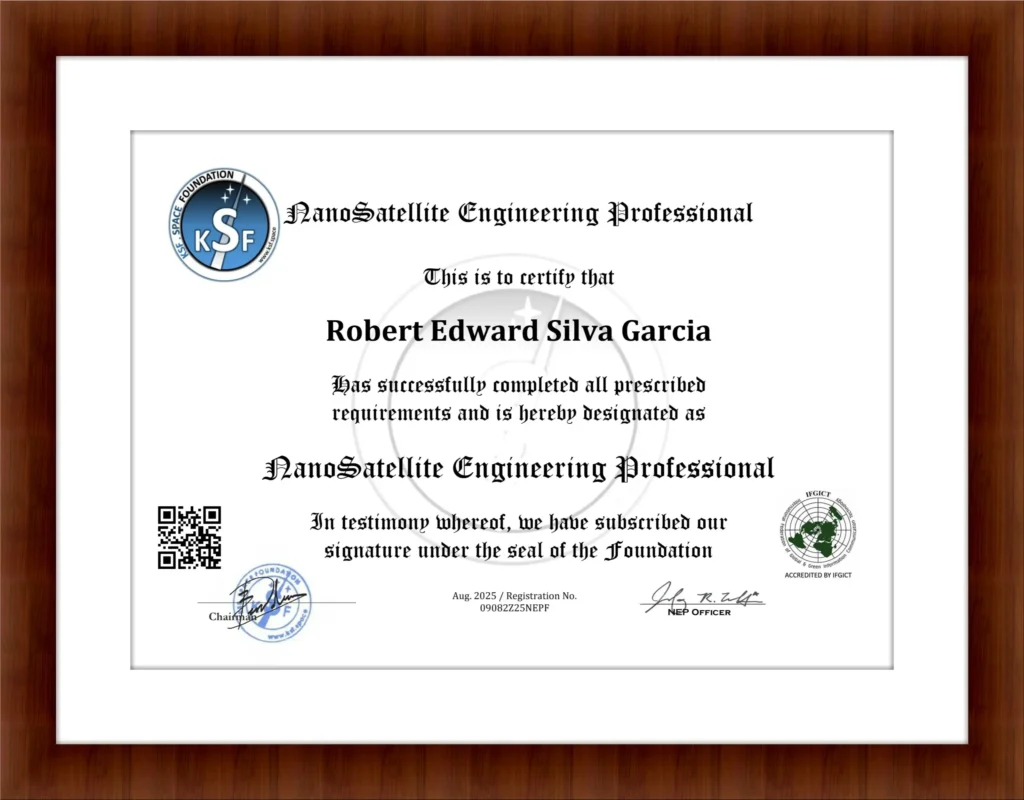
In the rapidly evolving landscape of the modern space sector, the demand for skilled professionals in the NewSpace economy has reached an all-time high. As space technology becomes more accessible, the need for hands-on, industry-standard training is paramount. KSF Space, a leader in the small satellite sector, has designed a comprehensive curriculum that bridges the gap between academic theory and orbital reality.
This guide explores the depths of the cubesat training programs offered by KSF Space, ensuring you have the knowledge to launch your career into the stars.
The democratization of space is no longer a futuristic concept; it is happening now. With the rise of mega-constellations and the miniaturization of electronics, CubeSats (standardized 10x10x10 cm units) have become the go-to platform for research, telecommunications, and Earth observation. However, building a satellite that can survive the harsh environment of Low Earth Orbit (LEO) requires specialized skills and precise engineering.
Why CubeSat Training is Essential for the Modern Space Economy
The space industry is no longer exclusive to government agencies. Startups, universities, and research institutions are launching hardware at an unprecedented rate. KSF Space recognized early on that the primary bottleneck for these missions isn’t the technology, but the lack of qualified personnel who understand the “NewSpace” approach.
Professional cubesat training provides the structural framework necessary to move from a hobbyist mindset to a professional engineering standard. Without this foundation, the failure rate for first-time missions remains high due to thermal mismanagement, power failures, or communication loss.
The Shift from Theory to Hands-on Application
Traditional aerospace degrees often focus on large-scale systems. KSF Space’s cubesat training pivots this focus toward the agile, cost-effective methodologies of nanosatellite engineering. This involves mastering:
Modular Design: Understanding how to stack independent bus boards using industry standards.
Rapid Prototyping: Utilizing advanced materials for mass efficiency.
Mission Integration: Learning the frameworks for environmental verification and testing.
Mastering the Nanosatellite Engineering Professional (NEP) Certification
At the heart of the foundation’s educational outreach is the Nanosatellite Engineering Professional (NEP) Certification. This is a globally recognized curriculum developed by engineering professionals specifically for the international space industry.
Flexible Online Learning Structure
KSF Space has revolutionized how cubesat training is delivered. To accommodate a global audience, the program is structured as a comprehensive digital ecosystem:
Online Presentations: Detailed, expert-led visual guides covering the latest in satellite technology. These sessions provide the foundational knowledge required to understand the nuances of the space environment.
Recorded Lecture Videos: A library of instructional content that allows students to review complex technical concepts at their own pace. Whether you are learning about link budgets or power depth-of-discharge, you can re-watch these as many times as needed.
Rigorous Online Exam: A comprehensive assessment designed to validate the student’s engineering knowledge and readiness for mission-critical tasks.
Professional Certification: A high-value credential that proves expertise to employers in the global space sector.
Core Modules of the NEP Curriculum
When you enroll in cubesat training through KSF Space, you follow a roadmap that covers the entire lifecycle of a satellite:
Mission Development: Defining viable and fundable missions, setting requirements, and understanding the mission timeline.
System Design: Navigating Electrical Power Systems (EPS), On-Board Computers (OBC), and Attitude Determination and Control Systems (ADCS).
Advanced Structures: Comparing specialized materials for orbital thermal stability and structural integrity during launch vibration.
Launch & Policy: Navigating the logistics of launch service providers, frequency licensing (ITU), and space debris mitigation guidelines.
Technical Deep-Dive: Subsystems Explored in CubeSat Training
To build a reliable satellite, one must understand how different subsystems interact. KSF Space places a heavy emphasis on system-level thinking.
Electrical Power System (EPS)
The EPS is the lifeblood of the satellite. Cubesat training covers the selection of solar cells (multi-junction GaAs), battery management systems, and power distribution units. Students learn how to calculate power budgets based on orbital sunlight and eclipse periods.
Attitude Determination and Control System (ADCS)
Knowing where your satellite is pointing is crucial for communication and imaging. The cubesat training curriculum explores sensors like magnetometers and sun sensors, as well as actuators like magnetorquers and reaction wheels.
Telemetry, Tracking, and Command (TT&C)
Communication is the only way to get data back from space. KSF Space teaches students about RF link budgets, frequency bands (VHF/UHF, S-Band, X-Band), and ground station operations.
How KSF Space is Revolutionizing Educational Satellite Kits
Learning about space requires interaction with hardware. To facilitate this, KSF Space has developed accessible, flight-ready CubeSat kits and suborbital platforms.
Affordable Access to Orbit
The KSF Space educational kit is designed to fit the budget of university labs and research firms. Unlike expensive proprietary systems, these kits use independent bus boards that can be interconnected. This modularity allows students to swap out payloads—such as biological experiments or climate sensors—without redesigning the entire satellite.
The Near-Space Testing Ground
Before reaching LEO, cubesat training participants often utilize KSF Space’s suborbital testing platforms. By launching to high altitudes via balloons or rockets, teams can test their sensors and communication protocols in a “near-space” environment at a fraction of the cost of a full orbital launch. This “test as you fly” philosophy is critical for mission success.
Frequently Asked Questions (FAQ)
Q: Can I take the cubesat training online? A: Yes. KSF Space offers a complete online path including interactive presentations, recorded lecture videos, an online exam, and professional certification.
Q: Who should attend cubesat training? A: This training is ideal for university students, aerospace engineers looking to specialize, researchers, and project managers entering the space industry.
Q: Is the NEP Certification recognized globally? A: Yes, KSF Space works with various international partners and academic institutions to ensure the curriculum meets global industry standards.
Q: What makes KSF Space kits different? A: They are flight-ready, cost-efficient, and modular, making them ideal for both education and actual mission deployment.
Q: How long does the cubesat training take? A: The program is self-paced via the online portal, allowing you to complete the modules and exam according to your own schedule.
Contact Information
Ready to take the first step toward your mission to orbit? Contact the KSF Space team for more information on upcoming cubesat training cohorts and how to get your NEP certification.
Website: www.ksf.space
Email: info@ksf.space