Space for Defense: How Small Satellite Tactical Defense is Revolutionizing Military Operations
By : ElKayyali Mohamed, FL, US.
The geopolitical landscape is shifting at a rapid pace, and with it, the domain of warfare has expanded beyond land, sea, and air. Today, the ultimate high ground is space. Modern military doctrines no longer view space assets as mere utilities for long-range communications or meteorological tracking. Instead, space has become an active operational theater where speed, precision, and resilience dictate the outcome of terrestrial conflicts.
At the center of this paradigm shift is the concept of small satellite tactical defense. Historically, military space capabilities relied on massive, geostationary satellites that took a decade to develop, cost billions of dollars, and sat like stationary targets in orbit. If one of these monolithic systems were compromised or disabled, entire communication and intelligence networks would go dark.
The introduction of low-cost, rapidly deployable small satellites—including CubeSats, NanoSats, and MicroSats—has fundamentally changed the calculus of national security. Operating in Low Earth Orbit (LEO), these distributed architectures offer the military unprecedented agility, real-time data streaming, and a level of systemic resilience that monolithic satellites could never achieve. This article explores how small satellite tactical defense is reshaping modern battlespace awareness, accelerating decision-making cycles, and securing the future of defense operations.
The Strategic Evolution: Moving Beyond Monolithic Space Architectures
For decades, strategic defense was synonymous with large-scale, exquisite space systems. While these platforms provided highly detailed imagery and robust communications, they possessed significant structural vulnerabilities.
The Vulnerability of High-Value Orbital Assets
Large satellites operating in Geostationary Earth Orbit (GEO) represent single points of failure. They are vulnerable to anti-satellite (ASAT) weapons, high-altitude electromagnetic pulses (HEMPs), cyber warfare disruptions, and directed energy attacks. Furthermore, their high development costs and long production cycles make them impossible to replace quickly during an active conflict.
The Paradigm Shift to Distributed LEO Constellations
To counter these vulnerabilities, modern defense departments are pivoting toward proliferated Low Earth Orbit (pLEO) configurations. By deploying hundreds of interconnected small satellites, military forces create a distributed network. If an adversary disables a single unit within a pLEO mesh network, the surrounding nodes immediately reroute data paths, ensuring zero loss of operational capability. This resilience alters the deterrence equation, making active interdiction efforts by adversaries both cost-prohibitive and structurally ineffective.
Real-Time Intelligence: Enhancing Battlespace Awareness in Modern Conflict
In contemporary warfare, information dominance determines victory. A commander who possesses real-time, accurate data regarding enemy troop movements, logistics lines, and air defense deployments holds a decisive advantage.
Traditional reconnaissance satellites often operate on predictable orbital paths, offering adversaries clear windows to conceal assets or execute maneuvers during overflight gaps. Distributed small satellite architectures solve this limitation by providing persistent surveillance. With a dense constellation of small platforms, the “revisit rate”—the frequency with which a satellite passes over a specific coordinate—drops from days or hours down to mere minutes. This continuous coverage makes tactical surprise nearly impossible for an adversary to achieve.
Multi-Sensor Fusion for Enhanced DetectionModern small satellites are no longer limited to basic optical payloads. Today’s tactical defense configurations integrate diverse, highly specialized sensors:
Synthetic Aperture Radar (SAR): Penetrates cloud cover, smoke, and nighttime darkness to deliver high-resolution ground imagery under any environmental condition.
Hyperspectral Imaging: Identifies material compositions, exposing camouflaged military hardware, decoy installations, and underground structures.
Signals Intelligence (SIGINT): Intercepts and maps adversary electronic emissions, communication nodes, and radar signatures directly from orbit.
When integrated into a unified battlefield network, these multi-sensor systems provide a comprehensive, real-time common operational picture (COP) for joint forces.
Accelerating the OODA Loop: Data-Driven Decision-Making at the Tactical Edge
To win an engagement, military forces must operate faster than the enemy’s ability to react. This process is defined by the OODA Loop: Observe, Orient, Decide, Act.
The Role of On-Orbit Edge Computing
Historically, space-based imagery had to be transmitted down to a specialized ground station, decrypted, processed by data analysts, and then routed back up the chain of command to field units. This linear pipeline introduced significant latency.
Small satellite tactical defense frameworks solve this bottleneck by utilizing onboard edge computing and artificial intelligence. Sophisticated machine learning algorithms process raw sensor data directly on the satellite. Instead of downlinking a massive raw imagery file, the satellite performs automated target recognition (ATR), identifies a high-value target, and transmits a lightweight, actionable alert vector directly to a tactical field terminal.
Disseminating Actionable Intelligence to Warfighters
By connecting space assets directly to tactical data links (such as Link 16 or advanced software-defined radios), small systems can stream targeting data directly to forward-deployed units, drone operators, and naval strike groups. This direct-to-warfighter intelligence delivery reduces target-to-strike latency from hours to seconds, giving field commanders the ability to neutralize emerging threats instantly.
Enhancing Resilient Communication Frameworks for Joint All-Domain Command and Control (JADC2)
Modern defense strategies rely on the concept of Joint All-Domain Command and Control (JADC2)—the seamless interconnectivity of land, air, sea, cyber, and space forces. A robust, interception-resistant communications network is the foundational requirement for this framework.
Optical Laser Inter-Satellite Links (ISLs)
One of the most critical innovations in small spacecraft technology is the integration of optical laser communications. Unlike traditional radio frequency (RF) communications, which can be jammed, spoofed, or intercepted by electronic warfare units, laser cross-links utilize highly directional, narrow beams to transmit data between satellites within a mesh constellation. This creates a secure, high-bandwidth orbital backbone that is highly resistant to electromagnetic interference.
Overcoming Electronic Warfare and Signal Jamming
Adversaries heavily invest in electronic jamming systems designed to sever communication links between ground troops and high-orbit satellites. Proliferated small satellite networks degrade the efficacy of these jamming attempts. Because these systems operate closer to Earth in LEO, the transmission signals are inherently stronger than those coming from high altitudes. Additionally, their distributed nature allows the network to dynamically switch frequencies or alter routing paths to circumvent localized jamming cells, ensuring that theater communications remain unbroken.
Rapid Deployment and Responsive Space: Adapting to Dynamic Threat Environments
The ability to dynamically respond to an emerging crisis is a core requirement of tactical defense operations. When a conflict erupts unexpectedly, relying exclusively on pre-existing orbital coverage can introduce critical intelligence gaps.
Tactically Responsive Space Operations (TRSO)
Small satellites allow for an operational concept known as Tactically Responsive Space Operations. Because these micro platforms are compact and compatible with low-cost commercial launch systems, military forces can store reserve assets in climate-controlled depots. If an adversary blinds an existing satellite or an urgent requirement emerges over a new theater of operations, a reserve small platform can be integrated into a launch vehicle and put into a precise orbit within 24 to 48 hours.
Low-Cost Production and Industrial Scalability
Building a traditional military satellite requires specialized cleanrooms, bespoke components, and years of engineering labor. In contrast, small platforms utilize commercial off-the-shelf (COTS) components and modular manufacturing standards. This industrial scalability enables high-rate production lines, allowing defense departments to scale up procurement rapidly, adjust sensor configurations based on changing threat intelligence, and deploy technological updates iteratively without waiting decades for next-generation platforms.
Integrating Small Satellites into Multi-Domain Operations
Small spacecraft do not operate in isolation; they serve as a critical force multiplier for land, naval, and air forces.
Enhancing Missile Warning and Tracking Systems
The emergence of hypersonic cruise missiles and maneuverable glide vehicles presents a severe challenge to legacy missile warning architectures. Traditional early warning satellites are optimized for high-altitude, predictable ballistic missile trajectories. Proliferated LEO constellations of small platforms, equipped with wide-field-of-view infrared sensors, can maintain a continuous track on highly maneuverable hypersonic threats lower in the atmosphere, providing tracking data to missile defense systems down-range.
Securing Naval Navigation and Aerial Drone Operations
In contested maritime environments like the South China Sea or the Mediterranean, naval fleets require precise positioning data to conduct coordinated operations. If Global Navigation Satellite Systems (GNSS) like GPS are degraded or spoofed by electronic adversaries, a localized constellation of tactical small platforms can broadcast localized alternative positioning, navigation, and timing (PNT) signals. This ensures that surface combatants, autonomous submersibles, and long-range aerial drones can navigate and execute strikes accurately within GPS-denied environments.
Tech Industry Collaboration and Commercial Space Integration
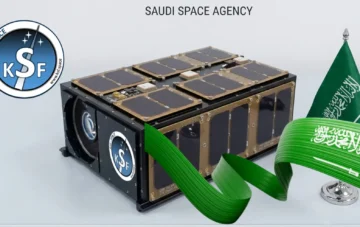
The rapid advancement of small spacecraft capabilities is driven by the close integration of commercial innovation and national security requirements. Organizations like the KSF Space Foundation work to accelerate space access and enhance technical standards for small systems worldwide.
By leveraging commercial manufacturing efficiencies, advanced software integration, and modular structures, defense organizations can deploy cutting-edge capabilities faster and at a fraction of historical costs. The partnership between commercial space providers and defense agencies bridges the gap between scientific research and field operations, ensuring that tactical defense frameworks adapt at the speed of commercial technology development.
Future Trajectories: The Long-Term Impact of Small Satellite Tactical Defense
As space access becomes more commoditized, the military balance of power will be determined by how effectively nations can deploy, manage, and defend their orbital networks. Future developments will likely focus on:
Autonomous Constellation Management: Utilizing swarm intelligence and onboard AI to allow hundreds of small platforms to execute autonomous station-keeping, collision avoidance, and task optimization without human intervention.
In-Orbit Servicing and Refueling: Developing standardized interfaces for small systems to extend their operational lifespan or upgrade their sensor payloads while in orbit.
Advanced Defensive Counter-Space Capabilities: Equipping small tactical platforms with localized electronic protection measures to actively detect and neutralize close-proximity orbital threats.
Ultimately, the deployment of small satellite tactical defense configurations turns space from a fragile, high-risk operational domain into a resilient, dynamic asset. By lowering the barriers to entry, accelerating data distribution, and ensuring structural redundancy, small systems are defining the next era of global defense and tactical deterrence.
Frequently Asked Questions (FAQ)
What is small satellite tactical defense?
It is the strategic deployment of low-cost, rapidly producible small platforms—such as CubeSats and NanoSats—in Low Earth Orbit (LEO) to support military and intelligence operations. These systems focus on providing persistent surveillance, secure communications, and real-time tactical data directly to field units.
How do small satellites improve military decision-making during battles?
By utilizing onboard edge computing and artificial intelligence, small systems can process raw sensor data in orbit. Instead of waiting for data to pass through distant ground tracking facilities, they identify high-value targets automatically and transmit actionable targeting data directly to warfighters, significantly compressing the decision-making cycle.
Why are distributed LEO constellations more secure than traditional military satellites?
Traditional satellites are massive, expensive, and few in number, making them vulnerable targets for anti-satellite systems. Distributed constellations spread operational capabilities across hundreds of small nodes. If a few units are disabled or jammed, the remaining network automatically reroutes data, maintaining uninterrupted capability.
Can small satellites function effectively if GPS is jammed?
Yes. Proliferated small networks can be configured to broadcast localized Alternative Positioning, Navigation, and Timing (A-PNT) signals. This enables ground troops, naval vessels, and autonomous drones to navigate and coordinate operations accurately even in highly contested, GPS-denied environments.
How can organizations collaborate on small satellite technologies for defense?
For academic inquiries, technical standards development, or strategic inquiries regarding small space systems, you can reach out directly via email to: info@ksf.space.
References and Strategic Sources
The Evolution of Low Earth Orbit (LEO) Architectures for National Security. Journal of Space Defense Studies, 2024.
Tactically Responsive Space Operations: A New Paradigm for Deterrence. Strategic Aerospace Review, 2025.
On-Orbit Edge Computing and Automated Target Recognition in Proliferated Constellations. IEEE Transactions on Aerospace and Electronic Systems, 2025.
Resilient Communications via Optical Inter-Satellite Links in Contested Environments. International Journal of Space Communications, 2026.
Technical standards, flight heritage frameworks, and orbital research resources managed by the KSF Space Foundation.
Author Biography
Dr. El Kayyali Mohamed
Dr. El Kayyali Mohamed is an internationally recognized multi-sector executive, scientist, and academic author specializing in global ICT standards, advanced nanosatellite engineering, and space-based technologies. He serves as the Chairman of the KSF Space Foundation, a leading organization dedicated to expanding access to space through cost-effective small satellite platforms.
Additionally, Dr. El Kayyali is the President of the International Federation of Global & Green ICT (IFGICT) and the President of the International University of Executive Education (IUEE). A recipient of the prestigious Queen Elizabeth Scientist Medal, his extensive research background includes serving as an industrial officer for the IEEE and as a former researcher at the University of California, Santa Barbara (UCSB). He holds a Ph.D. along with a diploma in healthcare innovation from Harvard Business School, and has authored five academic books preserved in the Library of Congress. Beyond his scientific and academic contributions.
Why the 16U CubeSat Structure is Redefining Mid-Range Missions
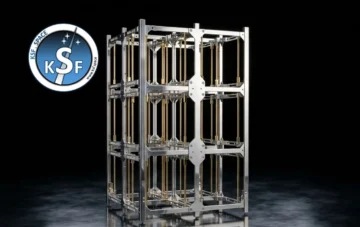
In the evolving landscape of space exploration, the 16U CubeSat structure has emerged as a “sweet spot” for developers. It offers a significant volume increase over the standard 6U or 12U formats, allowing for more complex payloads, advanced propulsion systems, and larger battery arrays without the prohibitive costs of a full-scale microsatellite.
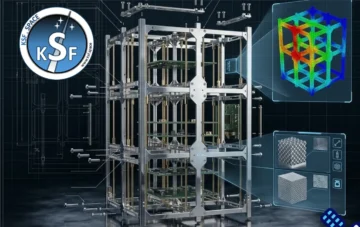
KSF Space has optimized the 16U design to ensure a perfect balance between mass and rigidity. By utilizing advanced machining techniques, KSF Spaceensures that every 16U cubesat structure meets the rigorous vibration and thermal requirements of modern launch providers.
Customization: Aluminum vs. Titanium
Choosing the right material for your cubesat frame is critical. KSF Space offers unparalleled flexibility in material selection:
Aluminum (7075/6061-T6): The industry standard. Aluminum provides excellent thermal conductivity and a high strength-to-weight ratio, making it the go-to for most 1U, 2U, and 3U missions.
Titanium: For missions requiring extreme thermal stability and superior strength, KSF Space provides titanium customize structure options. This is often preferred for deep space missions or high-stress orbital maneuvers.
Engineering Excellence: From 1U to 24U and Beyond
When you decide to build your satellite, the first step is selecting a cubesat structure that can withstand the “shake, rattle, and roll” of a rocket launch. KSF Space offers a comprehensive catalog of frames:
The Modular Approach (1U, 2U, 3U)
For educational institutions and technology demonstrations, the 1U, 2U, and 3U frames are the gold standard. These nanosatellite structure frame options are lightweight and designed for rapid integration.
High-Capacity Frames (6U, 12U, 16U, 24U)
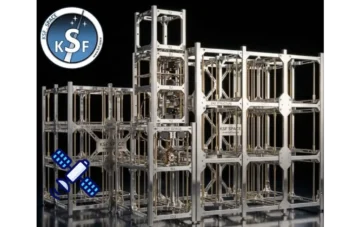
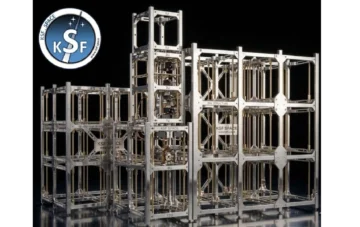
As missions become more ambitious, the need for larger frames like the 6U, 12U, 16U, and 24U increases. KSF Space specializes in these larger formats, ensuring that the cubesat frame remains perfectly aligned even under high G-loads.
Microsatellite Solutions
Beyond the CubeSat standard, KSF Space is equipped to build microsatellite size structures. These bespoke units are tailored for missions that exceed the 24U form factor, providing a robust platform for sophisticated Earth observation sensors or telecommunications transponders.
How to Build a Satellite: A Step-by-Step Guide with KSF Space
Many aspiring space engineers ask, “how to build satellite hardware that actually survives?” The process is rigorous but manageable when partnering with an experienced provider like KSF Space.
1. Define the Mission and Payload
Before you look for a cubesat structure, you must know what your satellite will do. Is it taking photos? Testing a new AI chip? The size of your payload will dictate whether you need a 3U or a 16U cubesat structure.
2. Choose Your Structure and Material
Select a nanosatellite structure frame from KSF Space. Consider whether your mission needs the cost-effectiveness of aluminum or the high-performance attributes of titanium. KSF Space allows you to customize structure parameters to fit specific mounting points or internal configurations.
3. Subsystem Integration
Once the cubesat frame is in hand, you begin the “stacking” process. This includes:
On-Board Computer (OBC)
Electrical Power System (EPS) and Solar Panels
Communication Systems (Transceivers/Antennas)
Attitude Determination and Control System (ADCS)
4. Environmental Testing
Every www.ksf.space structure is designed to pass. You must perform:
Thermal Vacuum Testing (TVAC): Simulating the temperature extremes of space.
Vibration Testing: Ensuring the cubesat structure can survive the launch vehicle’s acoustics and mechanical stress.
Flight Heritage: Why Ready-for-Mission Status Matters
In the space industry, “flight heritage” is the most valuable currency. KSF Space structures are not just theoretical designs; they have flight references that prove their reliability in the vacuum of space. By choosing KSF Space, you are utilizing a platform that has already navigated the complexities of orbital mechanics and environmental stressors.
This “ready for your space mission” status reduces the risk for insurers and launch providers. When you build your satellite using a KSF Space 16U cubesat structure, you are building on a foundation of proven success.
The KSF Space Advantage in Satellite Manufacturing
What makes KSF Space one of the top providers out there? It is the intersection of affordability and high-end engineering.
Precision Machining: Every cubesat frame is manufactured with micron-level precision.
Rapid Customization: Unlike other manufacturers with rigid designs, KSF Space can customize structure dimensions to meet unique mission requirements.
End-to-End Support: From the initial 1U prototype to a full-scale microsatellite deployment, KSF Space provides the technical documentation and support necessary for mission success.
Frequently Asked Questions (FAQ)
How to build cubesat structure frames from scratch?
Building a frame from scratch requires advanced knowledge of CNC machining, aerospace-grade materials, and CAD design. Most developers prefer to purchase a flight-proven cubesat structure from KSF Space to ensure it meets the strict deployer tolerances required by launch vehicles like the SpaceX Falcon 9 or Rocket Lab Electron.
What is the difference between a CubeSat and a microsatellite?
A CubeSat follows a standardized unit system (1U = 10x10x10cm). A microsatellite is generally larger, weighing between 10kg and 100kg, and does not necessarily follow the CubeSat form factor. KSF Space provides structures for both categories.
Can I get a 16U cubesat structure in titanium?
Yes. KSF Space can customize structure orders using titanium to provide extra strength and thermal resistance for demanding missions.
Why is the 16U format becoming popular?
The 16U cubesat structure provides a larger 4×4 unit footprint, allowing for larger aperture cameras and more robust power systems than the traditional 3U or 6U models.
Does KSF Space provide flight-ready hardware?
Absolutely. All KSF Space frames are “flight-ready,” meaning they are designed to meet the interface control documents (ICD) of major launch providers and deployer manufacturers.
References
“CubeSat Design Specification Rev. 14.1,” California Polytechnic State University.
“Small Satellite Market Size, Share & Trends Analysis Report,” Grand View Research.
“The Role of Nanosatellites in Modern Earth Observation,” Journal of Space Engineering.
Technical Specifications for Satellite Structures, KSF Space Engineering Division.