
CEO at 4DBC Group
Nanosatellite Professional Education by KSF Space
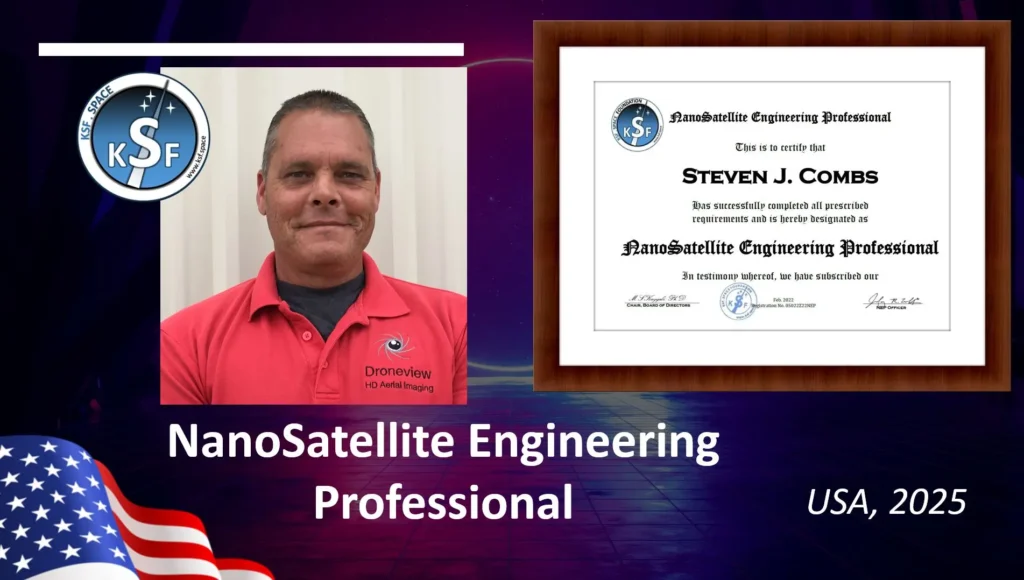
The “NewSpace” revolution is not just about rockets and satellites; it is about the knowledge required to command them. As we move through 2026, the global space economy is projected to exceed $1 trillion, driven largely by the proliferation of small satellite constellations. To meet this demand, Nanosatellite Professional Education has become the critical bridge for engineers, researchers, and students aiming to transition from terrestrial technology to orbital excellence.
At the heart of this global movement is KSF Space, a non-profit foundation dedicated to democratizing access to Low Earth Orbit (LEO). By offering a standardized, expert-led curriculum, KSF Space is ensuring that the next generation of space pioneers is equipped with the technical rigor and regulatory knowledge necessary for mission success.
The Rising Demand for Nanosatellite Professional Education
In traditional aerospace models, building a satellite was a decade-long endeavor costing hundreds of millions of dollars. Today, the CubeSat standard—typically 1U ($10 \times 10 \times 10$ cm) to 3U ($30 \times 10 \times 10$ cm) frames—has compressed those timelines into months. However, this speed brings new challenges that only a formal Nanosatellite Professional Education can address.
Bridging the Skills Gap in NewSpace
While many universities offer general aerospace degrees, they often lack the specialized focus on miniaturized systems and Commercial Off-the-Shelf (COTS) integration. Nanosatellite Professional Education fills this void by focusing on:
Modular Systems Engineering: Designing independent bus boards that can be stacked and integrated seamlessly.
Rapid Prototyping: Utilizing advanced materials like Aluminum 6061-T6 and PA11 polymers for mass efficiency.
Cost-Effective Launch Access: Understanding the logistics of rideshare missions on vehicles like SpaceX’s Falcon 9 or Rocket Lab’s Electron.
Mastering the Nanosatellite Engineering Professional (NEP) Certification
KSF Space pioneered the Nanosatellite Engineering Professional (NEP) certification to provide a global benchmark for space engineering skills. This is not just a course; it is a comprehensive validation of an individual’s ability to handle complex, mission-critical satellite projects.
A Curriculum Built by Industry Veterans
The Nanosatellite Professional Education curriculum provided by KSF Space was developed by a technical committee featuring experts with heritage from NASA, ESA, and JAXA. The program is divided into ten intensive chapters that cover the entire satellite lifecycle:
Mission Design and Requirements: Defining what the satellite will do and what sensors it needs.
Orbital Mechanics: Calculating trajectories, Keplerian elements, and decay rates.
Electrical Power Systems (EPS): Managing solar cells, battery discharge, and power distribution units.
Attitude Determination and Control (ADCS): Using magnetorquers and reaction wheels to keep the satellite stable.
Assembly, Integration, and Testing (AIT): Ensuring the hardware survives the 10G+ vibrations of launch.
By completing this Nanosatellite Professional Education, candidates join a prestigious group of over 1,700 certified professionals who are actively shaping the future of orbital technology.
Hardware and Practical Application in Nanosatellite Professional Education
One of the unique aspects of the KSF Space approach to Nanosatellite Professional Education is the emphasis on physical hardware. Theoretical knowledge is essential, but space is a physical environment that demands hands-on mastery.
Innovative Structural Materials
During their Nanosatellite Professional Education, students explore the trade-offs between different structural materials:
Aluminum 6061-T6: The industry “gold standard” for its rigidity and thermal conductivity.
Advanced PA11 Polymer: An additive-manufactured (3D-printed) alternative that offers a 40% mass reduction, ideal for weight-sensitive missions.
KSF Space provides the world’s most affordable flight-ready CubeSat kits, allowing universities and startups to move from the classroom to the cleanroom without the prohibitive “space-grade” price tags. These structures are verified under the NASA-GSFC-STD-7000 (GEVS) framework, ensuring they can survive the “Max-Q” phase of ascent.
Frequently Asked Questions (FAQ)
What exactly is Nanosatellite Professional Education?
Nanosatellite Professional Education refers to specialized vocational training and certification (like the NEP) focused on the design, build, and operation of satellites weighing between 1kg and 10kg.
Who should apply for the KSF Space NEP Certification?
The program is designed for aerospace students, electronics engineers, university faculty, and tech entrepreneurs who want to enter or advance within the small satellite industry.
Is the certification recognized by major space agencies?
Yes. The NEP curriculum is aligned with international standards and is highly respected by major space agencies and private aerospace firms globally as a mark of technical competence.
Can I complete the training online?
Yes, KSF Space offers a flexible online learning model featuring recorded video lectures and a comprehensive presentation ebook, allowing you to learn at your own pace.
Does the education include launch services?
While the core Nanosatellite Professional Education focuses on engineering, KSF Space also assists institutions with finding launch opportunities and navigating frequency licensing and policy regulations.
Conclusion: Securing Your Place in the Orbital Economy
The democratized space sector offers unprecedented opportunities, but success requires a foundation of excellence. Whether you are aiming to launch a climate-monitoring 3U CubeSat or looking to join a leading aerospace startup, Nanosatellite Professional Education from KSF Space is your ticket to the stars.
Contact Information
For enrollment details, institutional partnerships, or information on flight-ready hardware kits, reach out to the KSF Space team:
Official Website: www.ksf.space
Email: info@ksf.space