
CEO at 4DBC Group
Small Satellite "SmallSat" Professional Education
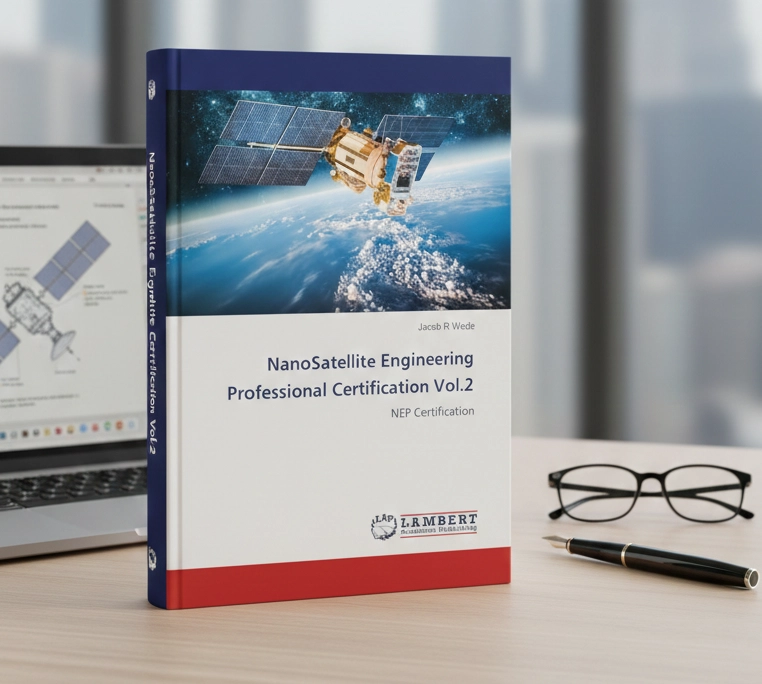
In the rapidly expanding frontier of the NewSpace industry, the year 2026 has become a pivotal moment for aerospace professionals. As satellite constellations grow increasingly complex and the demand for orbital real estate intensifies, the need for specialized expertise has never been more critical. At the forefront of this educational revolution is KSF Space, an organization dedicated to democratizing the stars through high-level vocational training.
This comprehensive guide explores why the NEP “SmallSat” Professional Education by KSF Space is the definitive pathway for those looking to master the intricacies of modern spacecraft engineering and mission management.
Elevating Aerospace Careers: The Power of Small Satellite “SmallSat” Professional Education by KSF Space
The shift from monolithic, bus-sized satellites to agile, cost-effective nanosatellites is no longer a future prediction—it is the operational standard of 2026. However, this transition has created a significant “skills gap” in the global workforce. Traditional university degrees often lack the hands-on, mission-focused curriculum required to launch hardware that survives the harsh vacuum of space.
Leading the charge to solve this problem is the NEP “SmallSat” Professional Education program. Developed by a committee of veterans from major space agencies including NASA, ESA, and JAXA, this program provides the world’s first and only professional-grade Nanosatellite Engineering Professional (NEP) credential.
Why Small Satellite “SmallSat” Professional Education is Vital in 2026
In an era where thousands of satellites are launched annually, mission success is often determined before the rocket even leaves the pad. For engineers and researchers, Small Satellite “SmallSat” Professional Education provides the rigorous technical framework necessary to minimize “dead on arrival” (DOA) scenarios and maximize orbital lifespan.
1. Global Industry Standardization
The NEPe “SmallSat” Professional Education path is built upon international standards such as NASA-GSFC-STD-7000 (GEVS). This ensures that every certified professional speaks the same technical language as the world’s leading launch providers and space agencies.
2. Specialized Knowledge for NewSpace Startups
For the booming ecosystem of aerospace startups, having NEP-certified engineers is a mark of mission credibility. The NEP “SmallSat” Professional Education covers the unique challenges of using Commercial-Off-The-Shelf (COTS) components, which are essential for maintaining the low-cost, high-speed development cycles that define NewSpace.
Technical Curriculum: Mastering the Mission Lifecycle
The NEP “SmallSat” Professional Education curriculum is structured into ten intensive modules. This multi-modal learning experience—featuring online recorded video lectures and comprehensive Ebooks—covers every aspect of a nanosatellite mission.
Mission Design and Orbital Dynamics
A successful mission starts with the math. During your NEP “SmallSat” Professional Education, you will master:
Keplerian Elements: Calculating precise trajectories for Low Earth Orbit (LEO) and Sun-Synchronous Orbits (SSO).
Link Budget Analysis: Ensuring your data can reliably reach ground stations across thousands of kilometers.
Launch Windows: Navigating the complex logistics of rideshare opportunities on heavy-lift rockets.
Spacecraft Subsystems and Integration
A CubeSat is a “system of systems.” To earn the NEP designation through NEP “SmallSat” Professional Education, candidates must demonstrate proficiency in:
EPS (Electrical Power Systems): Managing solar energy harvesting and lithium-ion battery safety.
ADCS (Attitude Determination and Control): Using magnetorquers and sun sensors to maintain precise satellite orientation.
OBDH (On-Board Data Handling): Developing the software architecture that serves as the satellite’s brain.
Environmental Testing and Structural Integrity
The “Max-Q” phase of launch the point of maximum dynamic pressure—is where many missions fail. Small Satellite “SmallSat” Professional Education teaches students how to perform Finite Element Analysis (FEA) and vibration testing to ensure the satellite frame can withstand the immense G-forces of launch.
Hardware Synergy: Learning with Flight-Proven Materials
A unique feature of KSF Space is the bridge between theoretical training and physical hardware. While the NEP “SmallSat” Professional Education program is a knowledge-based certification, it is deeply rooted in the hardware used in actual orbital missions.
Aerospace-Grade Aluminum vs. Advanced Polymers
Students learn the critical trade-offs in material science. For high-power missions requiring superior heat dissipation, KSF Space emphasizes Aluminum 6061-T6 and 7075 metallic frames. Conversely, for missions where every gram counts, Small Satellite “SmallSat” Professional Education explores the use of advanced PA11 polymers, which offer a 40% mass reduction compared to traditional structures.
Hands-On Flight Heritage
By aligning with KSF Space, students gain insights into an organization that operates its own near-space testing platforms and suborbital rockets. This “flight heritage” gives the Small Satellite “SmallSat” Professional Education curriculum a level of practical authority that purely academic programs cannot match.
The Path to Professional Certification
The Small Satellite “SmallSat” Professional Education program is designed for maximum flexibility, allowing busy professionals and students to learn at their own pace.
Digital Enrollment: Register via the KSF Space portal to gain 24/7 access to the LMS.
Recorded Lectures: Learn from industry veterans through high-quality video modules.
The NEP Exam: To receive the official Small Satellite “SmallSat” Professional Education credential, candidates must pass a rigorous exam with a minimum score of 60%.
Global Registry: Join a prestigious network of over 1,700 certified professionals working at the world’s leading aerospace firms.
Frequently Asked Questions (FAQ)
Q: Who is the Small Satellite “SmallSat” Professional Education program for?
A: It is designed for aerospace engineers, tech professionals looking to pivot into space, university researchers, and project managers in the defense and communication sectors.
Q: Is the Small Satellite “SmallSat” Professional Education recognized globally?
A: Yes. The NEP certification is recognized by major space agencies, foundations, and private aerospace companies worldwide as the industry standard for smallsat engineering.
Q: Does the course include hardware?
A: The Small Satellite “SmallSat” Professional Education is a cognitive and technical validation. However, KSF Space offers discounted CubeSat kits (1U, 2U, 3U) that perfectly complement the curriculum for hands-on labs.
Q: How long does it take to complete the program?
A: Because it is self-paced, completion time varies. Most professionals finish the Small Satellite “SmallSat” Professional Education within 4 weeks to 2 months.
Contact Information
Launch your future today. For more information on group enrollments, university partnerships, or individual certification paths, contact the KSF Space team.
Email: info@ksf.space
Official Website: www.ksf.space
Course Portal: Small Satellite “SmallSat” Professional Education
By choosing to invest in Small Satellite “SmallSat” Professional Education, you are doing more than just earning a certificate; you are securing your place in the future of the multi-billion dollar NewSpace economy.