
CEO at 4DBC Group
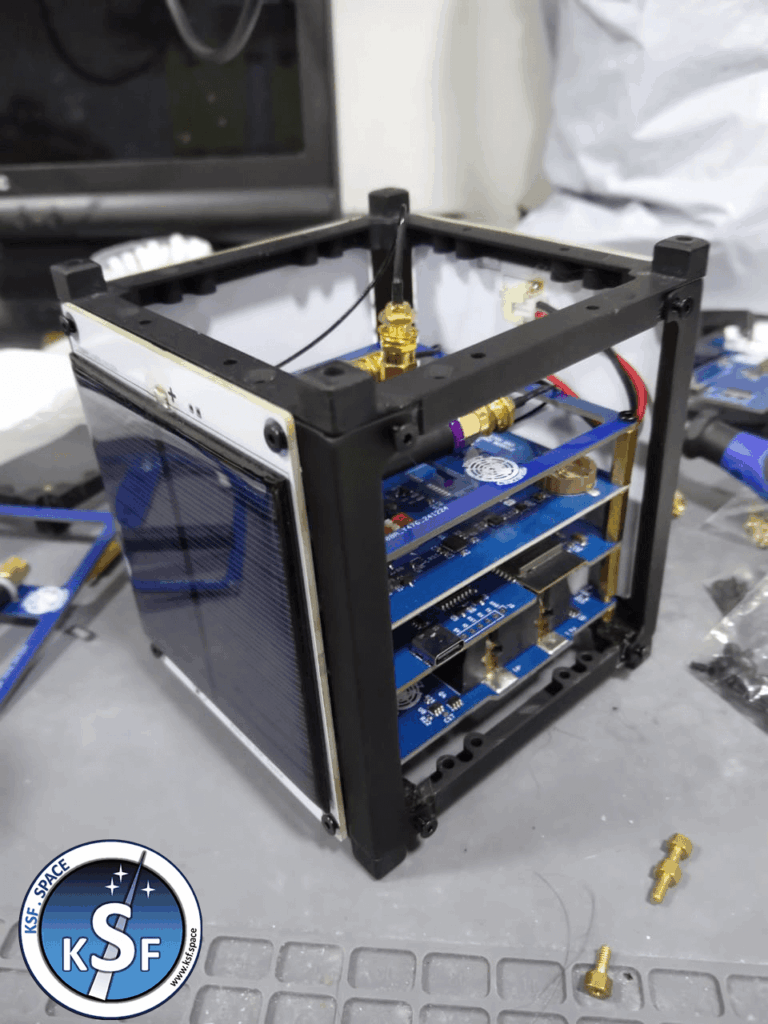
In the rapidly evolving NewSpace economy, the barrier to entry for space exploration has shifted. What was once the exclusive playground of billion-dollar government agencies is now accessible to students, researchers, and startups. Leading this democratization is the Cubesat Kit by KSF Space—widely recognized as the world’s cheapest cubesat kit.
This article explores how KSF Space is revolutionizing aerospace education and mission deployment by providing a professional-grade, suborbital-ready, and orbital-upgradable cubesat kit that includes the Nanosatellite Engineering Professional (NEP) certification at no additional cost.
Why the KSF Space Cubesat Kit is a Game-Changer for 2026
The year 2026 marks a turning point in satellite technology. With the rise of mega-constellations and reusable launch vehicles, the demand for affordable, standardized hardware has skyrocketed. The Cubesat Kit designed by KSF Space addresses the primary hurdle for most institutions: cost vs. capability.
Traditionally, a flight-ready satellite frame and its accompanying avionics could cost upwards of $20,000. KSF Space has disrupted this market by offering a comprehensive cubesat kit starting at approximately $5,000. This makes it possible for universities to fund space missions through teaching budgets rather than relying solely on elusive research grants.
Featured on Satnews Magazine
As featured on Satnews Magazine, the KSF Space Foundation has been lauded for its efforts to provide the “World’s Cheapest Cubesat.” This recognition underscores the foundation’s commitment to making the vacuum of space accessible to everyone, regardless of their financial background.
Technical Superiority: From Suborbital Testing to Orbital Reality
One of the standout features of this cubesat kit is its modularity. Unlike “toy” simulators or rigid high-end commercial models, the KSF Space cubesat kit is designed to grow with your mission requirements.
Suborbital Ready, Orbital Upgradable
Every cubesat kit is “suborbital ready” out of the box. This means it is perfect for high-altitude balloon (HAB) missions and suborbital rocket tests—critical phases for gaining flight heritage. However, the engineering doesn’t stop there. The kit is built using materials and standards—such as NASA-GSFC-STD-7000 (GEVS)—that allow it to be easily upgraded for a full orbital mission in Low Earth Orbit (LEO).
Advanced Material Options
The cubesat kit offers a choice between two high-performance materials:
Aerospace-Grade Aluminum (6061-T6/7075): The gold standard for orbital missions, providing excellent thermal conductivity and electromagnetic shielding.
Advanced PA11 Polymer: Using industrial Multi Jet Fusion (MJF) technology, this material is 40% lighter than aluminum. It is vacuum-stable, meets NASA’s low-outgassing requirements, and is ideal for mass-constrained missions.
The NEP Advantage: Free Professional Certification
Hardware is only half of the equation; expertise is the other. KSF Space bridges this gap by including the Nanosatellite Engineering Professional (NEP) certification for free with every cubesat kit.
What is the NEP Certification?
The NEP is a global gold standard for demonstrating a professional-grade understanding of nanosatellite systems. While other vendors simply ship you a box of parts, KSF Space provides a complete educational ecosystem.
When your institution acquires a cubesat kit, up to three students or team members receive access to:
Recorded Video Lectures: Covering orbital mechanics, EPS, ADCS, and mission design.
LMS Access: A comprehensive Learning Management System for self-paced study.
Final Assessment: A rigorous exam and “Mission Readiness Review” (MRR) presentation.
Professional Credential: An industry-recognized certificate that can be added to LinkedIn and professional portfolios.
Easy Integration: Off-the-Shelf Components (COTS)
The KSF Space cubesat kit is designed for rapid integration. It uses the PC/104 mounting standard, making it a “plug-and-play” solution that is compatible with most major CubeSat PCB vendors.
What’s Inside the Kit?
The flexible version 2.0 of the cubesat kit typically includes:
On-Board Computer (OBC): The “brain” of your satellite.
Electrical Power System (EPS): To manage solar charging and battery distribution.
Telemetry & Sensors: Integrated GPS, altitude, pressure, and 3-axis G-force monitoring.
4-Board Stack: Allowing ample room for your specific custom payload.
Whether you are conducting biological research, testing new IoT protocols, or capturing Earth imagery, the cubesat kit provides the volume and power required to succeed.
A Trusted Solution for Universities and Global Clients
The success of KSF Space is not just theoretical. The cubesat kit has been sold to many clients and universities worldwide. These institutions have transitioned from purely academic aerospace degrees to hands-on, mission-driven programs.
Why Clients Choose KSF Space:
Affordability: The cheapest professional-grade cubesat kit in the history of the smallsat industry.
Rapid Delivery: While other vendors have 6-month lead times, KSF Space often ships within 2 to 6 weeks.
Support: Direct access to engineering support to ensure your mission reaches the launchpad.
Frequently Asked Questions (FAQ)
1. Is the KSF Space Cubesat Kit really the world’s cheapest?
Yes. By operating as a non-profit and utilizing industrial additive manufacturing, KSF Space has lowered the entry price of a professional cubesat kit to approximately $5,000, significantly lower than commercial competitors.
2. Can I use this Cubesat Kit for a SpaceX launch?
Absolutely. All structures in the cubesat kit are designed to be compatible with standard P-POD and commercial deployers used by SpaceX, Rocket Lab, and Arianespace.
3. What is the benefit of the free NEP training?
The NEP training ensures your team knows how to build, test, and operate the satellite. It reduces the risk of mission failure and provides students with a professional certification that is highly valued in the aerospace industry.
4. How long does it take to assemble the kit?
The cubesat kit is designed for rapid integration. With the provided NEP training and instructions, a functional prototype can often be assembled and tested within a few weeks.
5. Does KSF Space offer launch services?
Yes, KSF Space helps institutions secure affordable “rideshare” opportunities for both near-space (balloon) and orbital missions.
Contact Information and Getting Started
Are you ready to launch your mission? Whether you are a university professor, a student leader, or a startup founder, the KSF Space cubesat kit is your fastest and most affordable path to space.
Official Website: https://ksf.space
Product Page: https://ksf.space/cubesat-kit/
General Inquiries: info@ksf.space
Engineering Support: info@ksf.space