
CEO at 4DBC Group
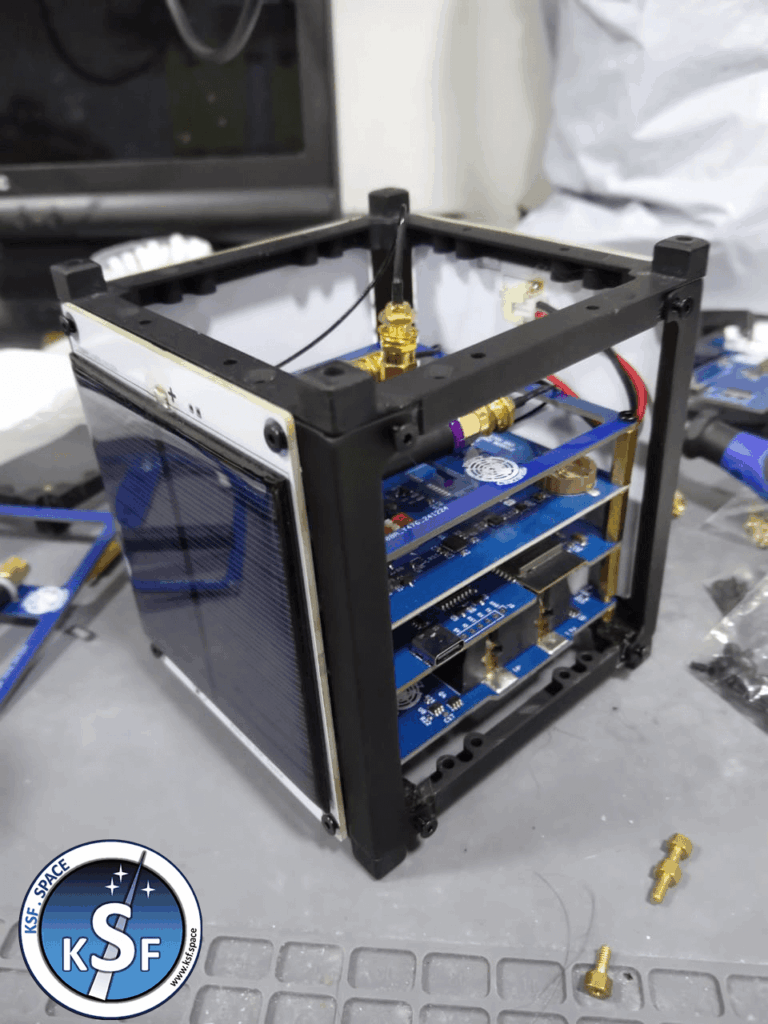
The “New Space” era has officially arrived, and it is no longer defined by the size of a country’s GDP, but by the size of its innovation. At the center of this revolution is the Cubesat Kit. These standardized, modular nanosatellites have democratized the cosmos, allowing universities, private researchers, and emerging startups to conduct sophisticated science in the vacuum of space.
However, the transition from a conceptual design to a functional satellite sitting on a launchpad is fraught with technical complexity and financial hurdles. KSF Space has identified these barriers and shattered them with the release of the Cubesat Kit Version 2.0. By providing the cheapest cubesat price on the market while maintaining a “Ready to Fly” suborbital-to-orbital upgrade path, KSF Space is making space accessible to all.
In this comprehensive guide, we will explore the intricacies of Cubesat Kit assembly, the specialized coding and telemetry software included, and the immense value of the free NEP certificate offered by KSF Space.
Mastering the Cubesat Kit Assembly: A Step-by-Step Engineering Journey
Assembling a satellite is a rite of passage for any aerospace engineer. It requires precision, patience, and a deep understanding of how disparate systems—mechanical, electrical, and computational—interact in an environment that offers no second chances. The KSF Space Cubesat Kit is engineered specifically to guide users through this high-stakes process.
The Foundation: Mechanical Integration of the Cubesat Kit
The physical structure of the Cubesat Kit is its first line of defense. Constructed from space-grade aluminum alloys, the 1U (10cm x 10cm x 10cm) frame is designed to be lightweight yet rigid enough to survive the violent vibrations of a rocket launch.
- Modular Rails: The Cubesat Kit features standardized rails that ensure it fits perfectly into any P-POD (Poly-Picosatellite Orbital Deployer).
- Internal Stack: The internal layout of the Cubesat Kit uses a PC/104-inspired bus system. This allows for “stacking” components like the On-Board Computer (OBC) and the Electric Power System (EPS) with minimal wiring complexity.
Online Training Sessions: Expert Guidance for Your Cubesat Kit
One of the most significant advantages of choosing the KSF Space Cubesat Kit is the inclusion of comprehensive online training sessions. You are never building alone. These sessions cover:
- Cleanroom Protocols: How to handle Cubesat Kit components to avoid ESD (Electrostatic Discharge) or contamination.
- Hardware-in-the-Loop (HITL) Testing: Learning how to simulate space conditions while your Cubesat Kit is still on the workbench.
- Payload Integration: Specific modules on how to interface your custom sensors or biological experiments with the Cubesat Kit data bus.
Affordable Innovation: How KSF Space Offers the Cheapest Cubesat Kit V2.0
The cost of entry for space has historically been the primary “gatekeeper.” Professional-grade satellite kits often cost tens of thousands of dollars, excluding launch costs. KSF Space has disrupted this pricing model by offering the cheapest cubesat price for a professional Cubesat Kit without sacrificing mission-critical reliability.
The “Ready to Fly” Suborbital Strategy
Many teams do not need to reach Low Earth Orbit (LEO) immediately. Suborbital flights—reaching the “edge of space” via high-altitude balloons or sounding rockets—provide a perfect testing ground.
- The V2.0 Advantage: The KSF Space Cubesat Kit Version 2.0 is designed as a “Ready to Fly” suborbital unit. This means the base price is kept low by optimizing the components for short-duration missions in the upper atmosphere.
- Orbital Upgradeability: As your mission grows, so does your Cubesat Kit. The V2.0 architecture allows for the addition of active Attitude Determination and Control Systems (ADCS) and radiation-hardened components, enabling a full transition to orbital flight.
Economic Scalability for Education and Research
By focusing on the Cubesat Kit as an educational tool, KSF Space leverages economies of scale. Because they provide these kits to hundreds of universities worldwide, they can procure high-quality sensors and solar cells at bulk rates, passing those savings directly to the customer. This makes the KSF Space Cubesat Kit the most viable option for student-led projects and lean startups.
Coding and Software: Powering the Cubesat Kit Intelligence
A Cubesat Kit is only as smart as its software. While many providers sell hardware and leave the coding to the user, KSF Space provides a complete software ecosystem designed to get your mission off the ground faster.
How to Code Your Mission: Source Code Included
Coding for space requires a focus on fault tolerance and power management. The KSF Space Cubesat Kit comes with:
- Foundational Source Code: Written in efficient C/C++, the provided source code handles basic satellite operations like “watchdog” timers, battery monitoring, and radio beaconing.
- Modular Programming Guides: Documentation that teaches you “how to code” custom mission logic into the Cubesat Kit. This is invaluable for students learning embedded systems.
Telemetry Software and Ground Control
Communication is the most fragile link in a space mission. The Cubesat Kit package includes professional telemetry software that allows you to:
- Visualize Real-Time Data: Watch as your Cubesat Kit reports its temperature, orientation, and power levels.
- Command and Control: Send encrypted uplink commands to your Cubesat Kit to trigger experiments or adjust data transmission rates.
- Data Analysis: The telemetry software logs every packet, allowing for deep post-flight analysis of your mission’s success.
The KSF Space NEP Certificate: Professional Validation for Every Purchase
The most unique aspect of the KSF Space offering is the commitment to the human element of space exploration. KSF Space is offering the NEP (Nano-sat Education Program) certificate for free upon purchasing a Cubesat Kit.
What is the NEP Certificate?
The Nano-sat Education Program (NEP) is a rigorous curriculum designed to standardize the knowledge required to operate small satellites. By including this for free with the Cubesat Kit, KSF Space ensures that users are not just “hobbyists,” but certified practitioners.
- Global Recognition: The NEP certificate is recognized by aerospace organizations and academic institutions as a mark of technical proficiency.
- Career Advancement: For students, having “Certified NEP Practitioner” alongside their experience with a Cubesat Kit is a massive differentiator in the job market.
- Safety and Standards: The certification ensures that anyone assembling a Cubesat Kit follows international guidelines for space debris mitigation and radio frequency interference.
Suborbital vs. Orbital: Building a Scalable Mission
Understanding the difference between suborbital and orbital missions is key to maximizing the value of your Cubesat Kit.
The Suborbital Phase: The “Ready to Fly” Experience
The initial version of the Cubesat Kit is optimized for suborbital environments. This is ideal for:
- Atmospheric Research: Testing air quality or radiation at various altitudes.
- Component Validation: Seeing how your custom-built sensors perform in a high-altitude vacuum before committing to an orbital launch.
- Rapid Iteration: Suborbital missions often have shorter lead times, allowing you to fly your Cubesat Kit, recover it, and fly it again.
The Orbital Leap: Upgrading Your Cubesat Kit
When you are ready for the ultimate challenge, the KSF Space Cubesat Kit V2.0 can be upgraded to orbital status. This transition involves:
- Enhanced Thermal Control: Adding specialized coatings to your Cubesat Kit to handle the extreme temperature swings of LEO.
- Advanced Solar Arrays: Deployable panels that provide the consistent power needed for long-term missions.
- Active ADCS: Magnetorquers or reaction wheels that allow your Cubesat Kit to point its camera or antenna with high precision.
The Economic Impact of the Cheapest Cubesat Kit Price
By providing the cheapest cubesat price, KSF Space is not just selling a product; they are fostering an ecosystem. When the cost of a Cubesat Kit drops, the diversity of players in the space industry increases.
- Emerging Nations: Countries without large space programs can now launch national research missions using the KSF Space Cubesat Kit.
- STEM Education: High schools and community colleges can now afford a real Cubesat Kit, turning theoretical physics into hands-on engineering.
- Startup Prototyping: Tech companies can use the Cubesat Kit to “fail fast and learn faster,” testing their core technology in space for a fraction of the traditional cost.
Comprehensive Summary of the KSF Space Cubesat Kit Offering
| Feature Category | KSF Space Cubesat Kit V2.0 Details |
|---|---|
| Pricing | Cheapest Cubesat price globally for professional kits |
| Launch Profile | Ready to Fly Suborbital; Modular Upgrade to Orbital |
| Assembly Support | Live Online Training Sessions & Technical Documentation |
| Software Suite | Source Code & Professional Telemetry Software included |
| Education | Free NEP Certificate with every Cubesat Kit purchase |
| Coding | Step-by-step guides on “How to Code” for space missions |
| Hardware | Space-grade 1U Frame, OBC, EPS, and Communications |
Conclusion: Start Your Space Mission Today
The KSF Space Cubesat Kit Version 2.0 represents the perfect intersection of affordability, education, and professional engineering. By choosing this Cubesat Kit, you aren’t just buying a satellite; you are gaining a partner in your space exploration journey.
With the cheapest cubesat price available, free source code, and the globally recognized free NEP certificate, there has never been a better time to take your ideas to the stars. The assembly process is your first step into a larger world of scientific discovery.
Contact and Purchasing Information
To secure your Cubesat Kit and begin your online training, contact KSF Space today.
Official Website: www.ksf.space
General Inquiries: info@ksf.space
Product Specifications: View the full Cubesat Kit catalog.