
CEO at 4DBC Group
Cubesat cost by KSF Space
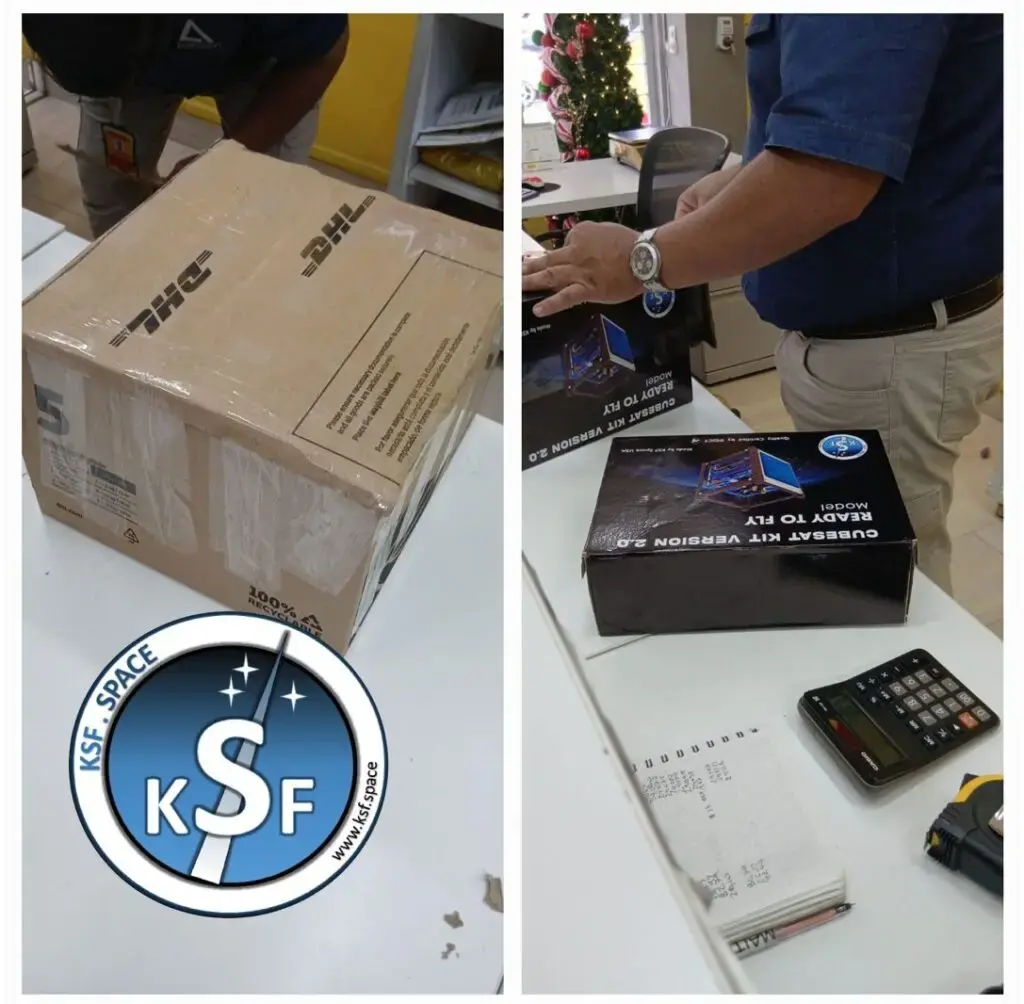
The aerospace landscape of 2026 is defined by a singular, transformative shift: the move from monolithic, multi-billion dollar satellite missions to agile, high-repetition nanosatellite constellations. For the managers of space companies and deans of academic institutions, the priority has shifted from simply “getting to space” to achieving “orbital ROI.” At the center of this decision-making process is the CubeSat kit cost.
KSF Space has engineered a paradigm shift in the industry by dismantling the traditional financial barriers that once limited space exploration to the most resource-rich entities. By providing professional-grade, flight-ready hardware coupled with accredited NEP (Nanosatellite Engineering Professional) training, KSF Space is the strategic partner of choice for those looking to lead in the NewSpace era.
I. The Executive Summary: Why CubeSat Kit Cost is a Strategic Asset
In both the commercial and academic sectors, procurement is no longer just about buying hardware; it is about buying time and reducing risk. Traditional CubeSat kit costs have historically been inflated by “space-grade” markups that do not always align with the rapid iteration cycles of modern R&D.
The KSF Space Advantage
KSF Space offers a standardized 1U CubeSat kit starting at $5,000 USD. To an academic dean, this means the ability to launch five missions for the price of one competitor’s structure. To a corporate R&D manager, this represents a drastic reduction in CAPEX, allowing for “fail-fast” prototyping that accelerates technology readiness levels (TRL).
II. Analyzing the Economics of Nanosatellite Development
Understanding the true CubeSat kit cost requires an analysis of the “Triple Constraint”: Cost, Performance, and Reliability. In 2026, KSF Space has optimized all three through advanced manufacturing and a mission-driven focus on global education.
1. Structural Materials and Mass Efficiency
Every gram added to a satellite structure is a dollar added to the launch bill. KSF Space provides two primary paths for structural integrity:
- Aerospace-Grade Aluminum (6061-T6/7075): The industry standard for thermal management and radiation shielding.
- PA11 (Polyamide 11) with MJF Technology: A bio-sourced polymer that offers a 40% mass reduction compared to aluminum. For companies launching 12U or 24U constellations, this mass saving translates into significant capital retention over the mission lifecycle.
2. Integration of Professional Avionics
A “low-cost” kit that fails in orbit is the most expensive kit you can buy. KSF Space kits include integrated, flight-proven sensors and power systems:
- Onboard Computing: High-speed ARM Cortex-based OBCs capable of complex data processing.
- Sensor Suite: Integrated GPS, 3-axis IMUs (acceleration and G-force monitoring), altitude, temperature, and humidity sensors.
- EPS (Electrical Power System): Reliable battery management units designed for the extreme thermal cycles of Low Earth Orbit (LEO).
III. A Strategic Roadmap for Deans: Elevating Academic Prestige
For deans of engineering and science schools, a CubeSat program is a powerful recruitment and retention tool. It transforms a theoretical curriculum into a hands-on aerospace laboratory.
Leading STEM with Professional Education
KSF Space is the global leader in providing STEM-focused nanosatellite kits that are tailored for universities and colleges. By implementing these kits, institutions can:
- Attract High-Value Grants: Funding bodies increasingly prioritize “mission-ready” research over theoretical papers.
- Global Accreditation: KSF Space partners with international academic bodies to ensure your space program meets global excellence standards.
- Hands-on Mission Ops: Students don’t just study orbital mechanics; they manage real-time telemetry and ground station communications.
The NEP Certification: A Career-Ready Workforce
Included in the CubeSat kit cost is the Nanosatellite Engineering Professional (NEP) course. This training ensures that your students graduate not just with a degree, but with a professional certification recognized by the world’s leading aerospace firms. This direct link between education and employment is the hallmark of a top-tier academic institution.
IV. The Manager’s Perspective: Commercial R&D and Space Mission Technology
In the private sector, the CubeSat kit cost is a line item that must justify its existence through technical performance. KSF Space provides the credibility and reliability that managers need to satisfy stakeholders and regulatory bodies.
NASA GEVS Standard Compliance
Credibility is everything in the space industry. KSF Space hardware is designed and tested according to the NASA-GSFC-STD-7000 (GEVS) framework. This ensures that:
- The structure can survive the high-G loads of modern launch vehicles.
- Outgassing is kept below 1.0% TML (Total Mass Loss), protecting sensitive optical payloads.
- The rails are hard-anodized to prevent “cold welding” inside the deployer.
Rapid Prototyping and Short Lead Times
Commercial R&D moves at the speed of light. While traditional vendors may have lead times of 6 to 12 months, KSF Space leverages industrial 3D printing and modular assembly to ship custom structures in 4 to 6 weeks. This speed allows companies to iterate on sensor designs without being held back by supply chain bottlenecks.
V. Strategic Benchmarking: KSF Space vs. The Industry
| Strategic Metric | KSF Space Solution | Traditional Industry Vendor |
|---|---|---|
| Average 1U Kit Cost | $5,000 USD | $18,000 – $35,000 USD |
| Material Innovation | PA11 & Hard-Anodized Al | Aluminum 6061 Only |
| Personnel Training | Included (NEP Certification) | Third-Party (Extra Cost) |
| Lead Time | 2-6 Weeks | 6-12 Months |
| LMS & Educational Support | Full Portal Access | None / Proprietary Only |
VI. Adapting the KSF Space Model for Your Organization
The decision to invest in a CubeSat program is a decision to invest in the future of your organization. Whether you are a dean building a world-class aerospace department or a manager developing the next breakthrough in satellite communication, KSF Space provides the turnkey solution.
Request a Technical Audit: Contact our engineering team to see how our kits can be adapted for your specific payload.
Review the NEP Curriculum: See how our professional certification can be integrated into your existing school or corporate training program.
Calculate Your Mission ROI: Compare the CubeSat kit cost of KSF Space against traditional providers and see how much more you can achieve with the same budget.
Frequently Asked Questions (FAQ)
1. What exactly is included in the $5,000 CubeSat kit cost?
The standard 1U kit from KSF Space includes the flight structure (Al or PA11), the onboard computer (OBC), the power management system (EPS), a suite of environmental and motion sensors, and NEP training for your team.
2. Can the kits support 3U or 6U configurations for commercial payloads?
Yes. While the 1U is our primary educational tool, KSF Space is a leader in 3U and 6U structures designed for commercial Earth observation and IoT constellations. These are built with the same rigorous GEVS standards.
3. How does the NEP course impact student employability?
The Nanosatellite Engineering Professional course is a hands-on certification covering the entire mission lifecycle. Graduates are often recruited by space agencies and private firms because they have practical experience in satellite integration and mission operations.
4. Is the PA11 structure durable enough for Low Earth Orbit? (Including Aluminum Options)
Yes, both PA11 and Aluminum structures provided by KSF Space are engineered specifically for the rigors of LEO.
PA11: Offers a 40% mass reduction over traditional metals, allowing for more scientific sensors or extra batteries. Its inherent ductility makes it resistant to mechanical shocks.
Aluminum (6061-T6 / 7075): Ideal for missions requiring superior thermal management or enhanced electromagnetic shielding. All rails are hard-anodized to ensure flight compliance.
5. Does KSF Space offer launch integration services?
Yes. Beyond the kit, we act as consultants to help universities and companies find the right “rideshare” opportunity, ensuring that your hardware actually reaches orbit.
Executive Contact Information
To secure a formal quote for your institution or to discuss a strategic R&D partnership, please contact the KSF Space foundation directly:
Official Portal: www.ksf.space
Executive Inquiries: info@ksf.space
Focus Areas: STEM Leadership, CubeSat Kit Cost Optimization, Professional Space Education, Space Mission Technology.
The stars are within reach, and the cost of entry has never been more efficient. Partner with KSF Space and lead the next generation of orbital innovation.