
CEO at 4DBC Group
Redefining the New Space Frontier: The New 16U CubeSat Structure Bus Frame by KSF Space
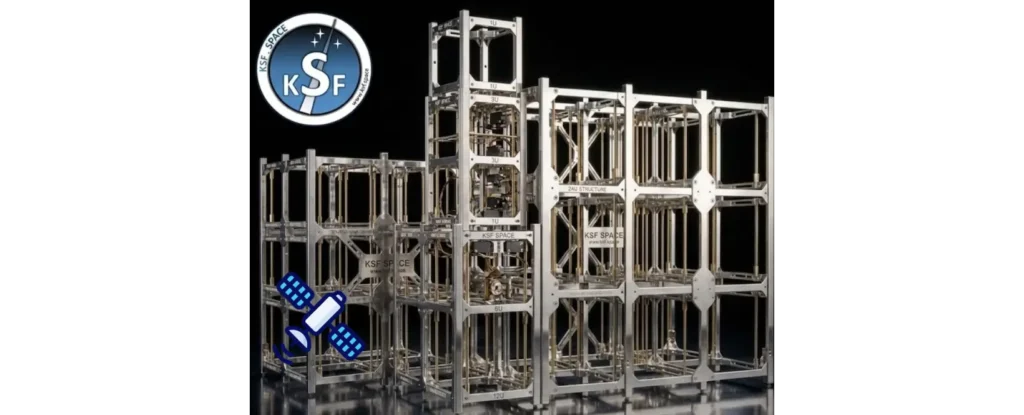
The global aerospace landscape is experiencing a massive paradigm shift. From large-scale constellations providing global Internet of Things (IoT) connectivity to high-resolution Earth Observation (EO) networks, the demand for scalable, high-integrity spacecraft architecture has never been greater. At the center of this transformation is the structural integrity of the satellite itself.
To meet the demanding requirements of commercial, military, and academic deep-space and Low Earth Orbit (LEO) missions, KSF Space has engineered an industry-defining solution: the new 16U cubesat structure bus frame. This advanced mechanical platform bridges the gap between traditional nanosatellites and larger microsatellites, providing the payload volume, thermal dissipation, and structural rigidity needed for high-stakes modern orbital applications.
Crucially, KSF Space recognizes that no two missions are identical. Beyond standard architectures, KSF Space offers comprehensive engineering flexibility, maintaining the capability and willingness to customize any size of satellite structure or cubesat structure chasses to perfectly match your proprietary payloads and launch constraints.
The Evolution of SmallSat Architecture: Why 16U is the New Sweet Spot
For years, satellite and cubesat nanosatellites builders operated within narrow bounds, frequently constrained by the strict payload size and power limitations of smaller forms. While a 1U or 2U frame is ideal for early-stage technology demonstrations, and a 3U or 6U frame serving as a reliable commercial workhorse, complex missions demand more.
The introduction of the 16U form factor by KSF Space changes the math entirely for constellation operators and defense planners.
Maximizing Volume without Maximizing Launch Costs
A 16U structure provides a substantial volumetric envelope, enabling the integration of heavy-duty optical lenses, multi-band synthetic aperture radar (SAR), high-throughput communication transponders, and complex electric propulsion systems. It delivers the payload capacity typically associated with microsatellites while retaining the significantly lower launch costs and rideshare compatibility of the standard CubeSat deployment ecosystem.
Addressing the Needs of Next-Gen IoT and Constellation Companies
For IoT satellite companies, the new 16U cubesat structure chasses allows for the simultaneous integration of large, deployable helical antennas and extensive solar arrays required to maintain continuous, high-bandwidth communication links with ground sensors. Instead of stacking multiple single-use satellites, operators can now deploy a highly capable, multi-payload 16U platform that handles edge computing, data routing, and signal processing on a single satellite frame.
Technical Analysis of the KSF Space 16U Cubesat Structure Chasses
Engineering a large-format cubesat frame requires a delicate balance between mass optimization and structural resilience. The 16U structure bus frame from KSF Space is engineered to withstand the extreme acoustic, random vibration, and pyrotechnic shock profiles encountered during rocket launches.
Material Engineering and Structural Integrity
The primary load-bearing components of the KSF Space 16U frame are CNC-machined from premier aerospace-grade aluminum alloys (6061-T6 and 7075). This ensures:
High Strength-to-Weight Ratio: Minimizes the parasitic dry mass of the structure, maximizing the allowable mass allocation for your scientific or commercial payloads.
Faraday Cage Protection: The metallic composition provides inherent electromagnetic interference (EMI) shielding, protecting sensitive internal avionics, onboard computers (OBCs), and payload electronics from destructive solar radiation and cosmic rays.
Thermal Management acting as a Heat Sink: In the vacuum of space, heat rejection occurs solely via radiation and conduction. The KSF Space frame architecture features optimized thermal pathways, conducting heat away from power-dense components like Electronic Power Systems (EPS) and transceivers out to the external shear panels.
Hard-Anodized Surface Finishing
To fully comply with stringent NASA, ESA, and major launch provider deployment standards, all outer guide rails of the KSF Space cubesat structure chasses undergo a specialized hard-anodization process. This surface treatment completely eliminates the risk of “cold-welding”—the phenomenon where identical metals fuse together when subjected to extreme pressure in a vacuum. The hard-anodized rails ensure a seamless, reliable exit from the deployment container into your target orbit.
Unmatched Versatility: Fully Customizable Cubesat Structure Chasses
While off-the-shelf standard structures are excellent for typical missions, specialized payloads often require tailored hardware adjustments. KSF Space has built its reputation on total hardware flexibility, offering semi-order and full-order structural customization for any size of satellite frame.
Tailored Modifications for Precision Operations
Whether your mission requires a unique form factor like 12U, 18U, 24U, or even up to 48U, KSF Space can adapt its modular engineering blueprints to deliver a custom bus.
Customization Capabilities Include:
Precision Aperture Machining: Custom CNC milling on side shear panels to create precise windows for Earth observation camera lenses, star trackers, or laser communication optical heads.
Custom Internal Mounting Layouts: Moving beyond the standard PC/104 stack layout to build bespoke internal mounting brackets, enabling non-standard electronic boards or modular sub-payloads to be suspended securely within the frame.
Antenna and Solar Array Deployment Integration: Specialized pre-drilled hard points and hinge cutouts designed to mount custom deployable solar panels or high-gain antenna arrays directly onto the cubesat frame.
This rapid-customization philosophy drastically shortens the integration and testing (I&T) phase on the ground, saving engineering teams hundreds of man-hours and lowering overall project risk.
Launch Vehicle Agnostic Engineering: Flight-Ready Configuration
A major bottleneck for satellite developers is modifying the satellite frame to meet the varying requirements of different rocket launchers. The 16U cubesat structure chasses by KSF Space is engineered from the ground up to be completely launcher agnostic.
The structural design has been verified through exhaustive Finite Element Analysis (FEA) and physical testing regimens that replicate and exceed the standard guidelines outlined in the NASA-GSFC-STD-7000 (General Environmental Verification Standard – GEVS).
Whether your payload is booked on a SpaceX Falcon 9 rideshare, a Rocket Lab Electron dedicated launch, or an ISRO PSLV mission, the KSF Space structural architecture satisfies the interface control documents (ICDs) of universal deployment dispensers worldwide.
Empowering the NewSpace Ecosystem with Sustainable Innovation
Choosing KSF Space means partnering with an organization dedicated to lowering the barriers to entry for space exploration. As an elite international entity, KSF Space combines high-end industrial manufacturing with an accessible procurement model, enabling startups, universities, defense organizations, and mega-constellation companies to acquire top-tier hardware without traditional aerospace markup.
From the compact 1U educational models up to the massive 24U and custom 48U commercial buses, the entire product family is built with user-friendly accessibility in mind. Detachable shear panels allow your engineering team to fully assemble, configure, and troubleshoot internal electronics stacks while the primary frame is open, simplifying last-minute hardware adjustments before final button-up and environmental sealing.
Secure Your Custom Satellite Structure Today
The success of your upcoming orbital mission begins with a bulletproof structural foundation. Do not compromise on the safety, thermal performance, or configuration of your critical payloads. Whether you require the high-capacity standard 16U platform or a fully customized set of cubesat structure chasses designed to your exact dimensions, KSF Space has the engineering capability to deliver.
For detailed CAD files, technical data sheets, structural material certifications, or to receive a tailored quotation for a customized satellite structure, contact the expert aerospace design team directly.
Official Website: www.ksf.space
Direct Inquiry Email:
info@ksf.space
Frequently Asked Questions (FAQ)
What material options are available for the KSF Space 16U cubesat structure chasses?
The primary 16U structure is manufactured from premium aerospace-grade Aluminum 6061-T6 and 7075. For highly specific mass-critical or rapid-prototyping missions, KSF Space can also incorporate space-qualified advanced polymers using precise additive manufacturing techniques, though high-grade aluminum remains the standard for heavy-payload orbital missions due to superior thermal dissipation and EMI shielding.
Can KSF Space design and manufacture a satellite frame outside of the standard U-sizes?
Yes. While KSF Space offers standard catalog sizes including 1U, 2U, 3U, 6U, 12U, 16U, 18U, and 24U, they specialize in custom aerospace engineering. Their team is ready to design and CNC-mill custom configurations or specialized cubesat structure chasses up to 48U based on your specific payload geometry and launch provider constraints.
How does the 16U cubesat frame handle thermal dissipation in Low Earth Orbit?
The KSF Space 16U satellite frame features high-conductivity aluminum paths designed to act as a primary heat sink. Thermal energy generated by internal high-power processors, radios, or payloads is conducted away from the components through structural brackets into the exterior shear panels, where it is safely radiated into space, maintaining a stable internal environment.
Are the structures compliant with universal deployment mechanisms?
Absolutely. All standard CubeSat structures, including the new 16U frame, strictly adhere to the updated CubeSat Design Specifications (CDS). The hard-anodized external rails fit perfectly within standard containerized deployers used by prominent rideshare aggregators and launch service providers globally.
What is the typical lead time for a customized cubesat structure chasses?
Because KSF Space maintains an active, advanced manufacturing facility and a robust raw material inventory, standard structures can ship within weeks. For semi-order or full-order customized designs, lead times typically range from 3 to 6 weeks following final engineering design approval, significantly beating commercial market averages. For specific project timelines, contact info@ksf.space.