
CEO at 4DBC Group
The Ultimate Guide to CubeSat KSA: Transforming Aerospace Education in Saudi Arabian Universities
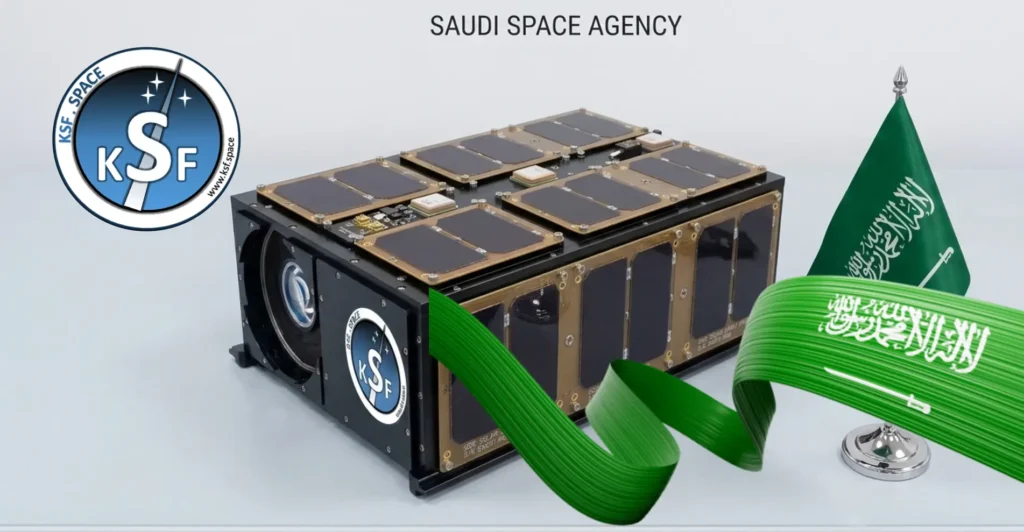
The global space race is undergoing a radical paradigm shift. The era of multi-billion-dollar, school-bus-sized satellites monopolized by superpowers has transitioned into the “NewSpace” revolution. Today, compact, agile, and cost-effective nanosatellites are defining the future of orbital research, global telecommunications, and climate monitoring. At the absolute forefront of this transformation is the Kingdom of Saudi Arabia, driven by its ambitious Vision 2030 initiatives and the strategic oversight of the Saudi Space Agency.
As the Kingdom accelerates its localization of high-tech space sectors, building localized technical talent has become an urgent national imperative. Academic institutions are under immense pressure to transition from theoretical textbooks to hands-on, hardware-in-the-loop engineering. To achieve this, integrating a robust CubeSat KSA program within every prominent Saudi University is no longer a luxury—it is a baseline requirement.
The primary obstacle for most institutions has historically been the steep financial and operational barrier to entry. This is exactly where KSF Space, a premier USA-registered non-profit organization, steps in. KSF Space provides the ultimate bridge between academic theory and flight-proven reality. By engineering the world’s most affordable professional Cubesat KSA frames, complete suborbital-ready kits, and industry-standard training courses, KSF Space is uniquely positioned to empower every KSA University and college to launch their own successful space missions.
The Strategic Importance of CubeSat KSA in Vision 2030
Saudi Arabia’s national roadmap explicitly targets the localization of defensive, industrial, and space capabilities. Space technology acts as a force multiplier for a knowledge-based economy, impacting everything from high-precision agriculture to urban smart-city management. A specialized focus on the development of a Cubesat Saudi Arabia pipeline directly addresses these objectives.A CubeSat KSA project offers an uncompromised, miniature environment where researchers can validate advanced components without the multi-million-dollar financial risk of traditional satellites.
Empowering STEM Education Across Saudi Arabian Universities
Science, Technology, Engineering, and Mathematics (STEM) education can often suffer when students are confined to abstract math and computer simulations. The magic of space technology lies in its ability to ignite passion and require extreme cross-disciplinary collaboration. A single Nanosatellite Saudi Arabia initiative forces computer scientists, mechanical engineers, electrical engineers, and physics students to step out of their silos and work as a unified flight crew.The Saudi Space Agency has already demonstrated its immense commitment to academic satellite development through initiatives like the “SARI” competition, which recently saw student-designed small satellites from institutions like Umm Al-Qura University and Prince Sultan University successfully reach orbit. Furthermore, pioneering achievements like King Abdullah University of Science and Technology’s KAUSTSat—the region’s first research-focused hyperspectral Earth observation mission—show exactly what is possible when a Saudi University embraces the NewSpace philosophy.
By using a standardized professional architecture, like the 1U to 3U platforms pioneered by KSF Space, universities can lower the technical risks that plague early-stage student teams. Hands-on interaction with actual flight hardware gives undergraduate and postgraduate students a profound competitive edge, making them instantly hirable upon graduation.How KSF Space Accelerates University Space Mission Readiness
KSF Space stands apart from commercial hardware vendors because of its foundational mandate as a non-profit organization: to democratize access to the orbital environment. Instead of marking up space-grade components to exorbitant commercial rates, KSF Space offers institutional-grade satellite structures, complete kits, and international certification pipelines engineered specifically for academic budgets.
The Flagship $5,000 USD CubeSat Kit
For most higher education departments, procuring entry-level aerospace training gear can easily exhaust an annual budget. KSF Space completely shatters this financial barrier with its globally acclaimed CubeSat Kit, priced competitively at just $5,000 USD.
Unlike decorative or non-functional classroom models, this is a highly sophisticated, suborbital-ready system designed to meet rigorous NASA-GSFC-STD-7000 (GEVS) engineering requirements. The standard package includes:
-
Advanced Material Flight Frame: Precision-engineered chassis available in PA11 bio-sourced polymer (ideal for lightweight suborbital or high-altitude balloon flights) or premium Aerospace-Grade 6061-T6 Aluminum for harsh radiation and thermal environments.
-
Comprehensive Subsystems: A fully integrated Onboard Computer (OBC), a highly efficient Electrical Power System (EPS), and an onboard telemetry suite.
-
Integrated Sensor Payload: High-precision sensors recording real-time GPS positioning, altitude, barometric pressure, temperature, humidity, and 3-axis G-force acceleration.
-
Open Architecture: Fully upgradable to orbital specifications, giving universities an affordable path to scale their designs from the laboratory bench straight to an orbital launch vehicle.
Nanosatellite Flight Structures from 1U to 24U
As university research matures, payload demands naturally expand. To support this growth, KSF Space fabricates a complete family of modular, flight-proven nanosatellite structures. Whether an engineering department is building a simple 1U technology demonstrator or a highly complex 16U or 24U multi-payload climate observation platform, these frames offer peerless reliability.
| Structure Size | Primary Academic & Commercial Use Case | Material Configuration |
|---|---|---|
| 1U / 2U / 3U | STEM Education, Atmospheric Studies, Initial IoT Prototyping | PA11 Polymer / Aluminum 6061-T6 |
| 6U / 12U | Medium-Res Earth Imaging, Advanced Telecommunications | Hard-Anodized Aluminum |
| 16U / 24U | High-Resolution Hyperspectral Sensors, Deep-Space Research | GEVS-Compliant Heavy Aluminum |
Every single KSF Space frame features modular interior rails to explicitly eliminate the risk of vacuum cold-welding, maintains high thermal conductivity to act as a natural heat sink, and is meticulously toleranced to integrate seamlessly with standard commercial deployers like SpaceX-compatible canisters and Nanoracks systems.
Global Credibility: NEP Courses and Space Technology Certifications
Acquiring physical satellite hardware is only half of the equation; ensuring the university faculty and students possess the specific engineering competencies required to operate it safely is the true key to mission success. KSF Space brings absolute global credibility to every sector of space education and satellite mission technology through its world-renowned pedagogical framework.
The NEP Certification: The Global Aerospace Gold Standard
Every purchase of a KSF Space CubeSat Kit includes complimentary Nanosatellite Engineering Professional (NEP) certification training for three students or faculty members. Handled completely through an advanced online Learning Management System (LMS), the NEP course is recognized worldwide as a premier curriculum for masterfully translating complex orbital concepts into practical engineering skills.
The comprehensive NEP program thoroughly addresses critical technical areas:-
Orbital Mechanics & Link Budgets: Calculating precise satellite trajectories and managing signal-to-noise ratios for reliable ground station communications.
- Thermal Management & Outgassing: Designing thermal paths to survive intense $+120^\circ\text{C}$ to $-40^\circ\text{C}$ temperature swings in orbit while managing material outgassing limits (Total Mass Loss $< 1.0\%$).
-
Power Optimization: Simulating power generation via solar panels versus duty-cycle drain from intense computational payloads.
-
Environmental Validation: Preparing structures to withstand brutal 10G+ launch vibration profiles under General Environmental Verification Standard (GEVS) criteria.
By providing formal certification alongside robust hardware, KSF Space guarantees that a Saudi University isn’t left struggling with unboxed components. Instead, teams hit the ground running with an industry-vetted engineering methodology that drastically minimizes the probability of catastrophic orbital failure.
Teasing the Future: Why KSA Universities Must Act Today
The global space economy is moving at exponential speeds. The universities that establish their nanosatellite programs today will be the ones securing multi-million-dollar research grants, launching proprietary payloads, and forming elite partnerships with the Saudi Space Agency tomorrow. Delaying entry into this space means allowing your engineering curriculum to fall behind the rapidly evolving modern baseline. Imagine your university engineering department capturing headlines across the Middle East as your custom-built Cubesat Saudi Arabia successfully deploys from a launch vehicle, streaming real-time environmental data back to a tracking station situated right on your campus. Picture your graduate students walking straight into top-tier leadership positions at international aerospace organizations because they spent their university years managing an active, flight-certified orbital project.This future is fully attainable, highly structured, and remarkably cost-effective. By partnering with KSF Space, your institution eliminates the immense financial risk, the confusing vendor fragmentation, and the steep learning curves that historically stalled academic space ambitions. The hardware is flight-ready, the academic training curriculum is fully mapped out, and the launch compatibility is globally verified.
Frequently Asked Questions (FAQ)
Is the $5,000 USD CubeSat Kit fully functional for orbital operations?
The standard $5,000 USD KSF Space CubeSat Kit is delivered as a fully complete, suborbital-ready flight model perfect for high-altitude balloon flights, edge-of-space testing, and rigorous laboratory environment simulations. Crucially, its internal architecture is completely modular and open. This means a university can seamlessly upgrade the onboard transponders, power systems, and structural framing to full orbital specifications whenever they are ready to transition to a Low Earth Orbit (LEO) launch.
How does KSF Space assist a Saudi University with strict budget limits?
Because KSF Space operates strictly as a non-profit foundation, its hardware pricing structures reflect direct manufacturing costs rather than commercial markups. This approach allows a KSA University to deploy institutional space programs at a mere fraction of the budget required by traditional defense and aerospace vendors, ensuring maximum resource allocation toward custom student payloads and primary scientific research.
What are the prerequisite requirements for students taking the NEP courses?
The Nanosatellite Engineering Professional (NEP) courses are designed to accommodate anyone with a foundational background in basic science, introductory physics, or general engineering. The curriculum builds systematically from elementary aerospace principles up to highly complex topics like link budget calculations, thermal mechanics, and structural resonance testing, ensuring accessibility for undergraduate students while remaining deeply informative for senior research faculty.
Are KSF Space satellite structures compatible with modern commercial launch deployers?
Yes. Every single nanosatellite and Cubesat KSA frame built by KSF Space—spanning from the foundational 1U models up to the massive 24U deep-space chassis—is meticulously engineered to comply with the global CubeSat Design Specification (CDS). They are thoroughly flight-proven and completely compatible with major commercial rideshare deployers, including SpaceX Falcon 9 canister systems, Exolaunch, and Nanoracks configurations.
Secure Your University’s Place in the Sky
The NewSpace revolution waits for no one. Give your engineering faculty the ultimate tool for academic excellence, provide your student body with an unforgettable educational experience, and directly support the technological autonomy of the Kingdom of Saudi Arabia.To receive a detailed institutional brochure, request customized hardware quotes for custom payload specs, or schedule a formal technical consultation regarding your university’s upcoming space roadmap, please reach out directly to the KSF Space academic support team.
-
Official Website: www.ksf.space
- Academic & Technical Inquiries: info@ksf.space
-
Headquarters: United States of America (Global Non-Profit Aerospace Outreach)