
CEO at 4DBC Group
2U Cubesat Structure
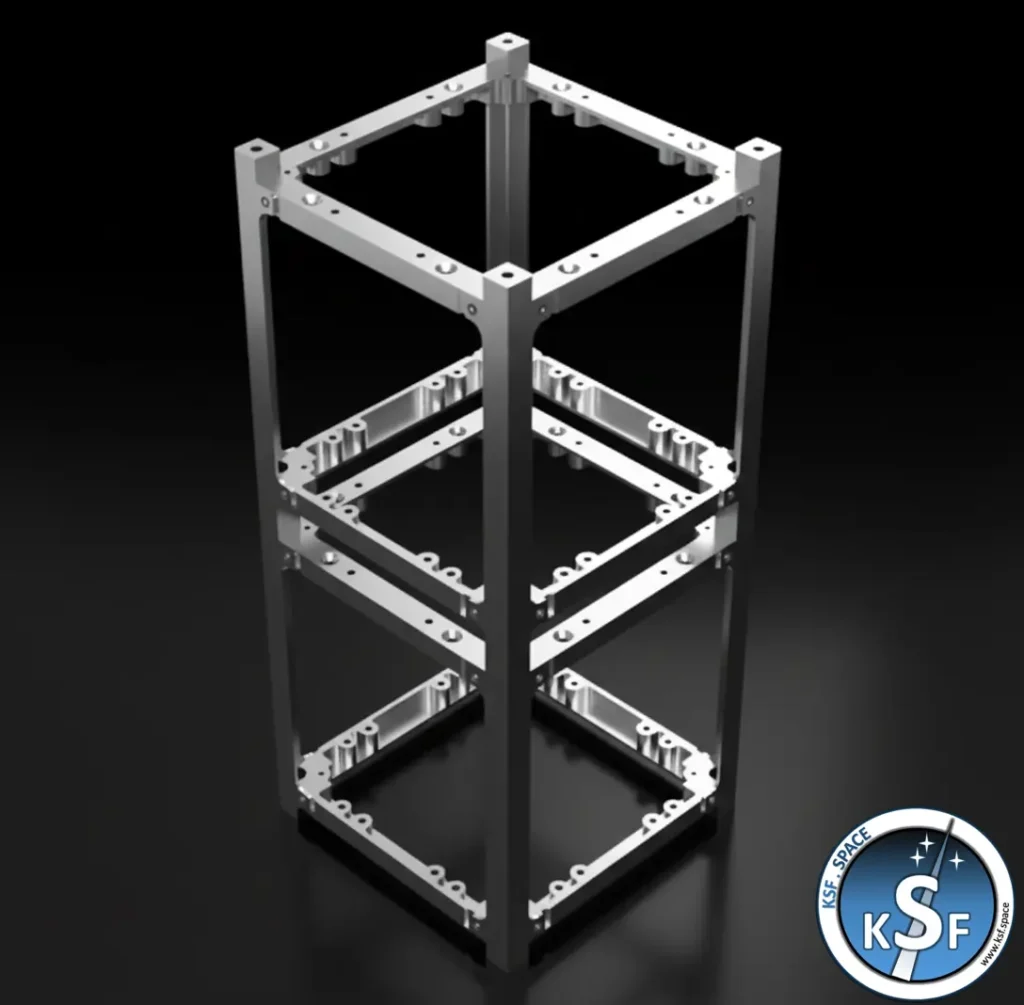
In the rapidly evolving landscape of the “New Space” era, the demand for reliable, cost-effective, and versatile satellite frames has never been higher. Among the various form factors, the 2U CubeSat structure has emerged as the ideal choice for bridging the gap between small technology demonstrators and full-scale orbital research.
The KSF Space Foundation, a global leader in democratizing space access, has redefined the standards for this category. Operating as a non-profit organization rather than a commercial company, KSF Space is dedicated to removing the financial barriers that often prevent universities and developing nations from reaching orbit. By offering a 2U CubeSat structure that is widely recognized as the cheapest in the world, they have transformed space from an elite playground into an accessible classroom.
Why Choose a 2U CubeSat Structure for Your Next Mission?
The 2U CubeSat structure (measuring approximately 100 x 100 x 227 mm) offers exactly double the internal volume of a standard 1U unit while maintaining the same 10×10 cm footprint. This extra space is critical for:
- Enhanced Power Systems: Larger battery arrays and deployable solar panels.
- Complex Payloads: Advanced sensors, high-resolution cameras, or biological experiments that require more vertical room.
- Dedicated Propulsion: Space for micro-thrusters to perform orbital maneuvers.
The World’s Most Affordable High-Quality Frame
Because KSF Space operates as a non-profit, its pricing model is designed to cover manufacturing costs and reinvest in global space education rather than generating corporate profit. This unique mission allows them to offer the “world’s cheapest CubeSat” solutions without compromising on the precision engineering required for orbital flight.
Material Excellence: Aerospace Aluminum vs. Education PA11
Choosing the right material for your 2U CubeSat structure depends heavily on your mission profile—specifically whether you are in the “Learning” phase or the “Launch” phase.
1. Aerospace Aluminum (6061-T6 / 7075)
For orbital missions, aluminum remains the gold standard. KSF Space utilizes high-grade aluminum alloys that offer:
- Thermal Conductivity: Acts as a heat sink, dissipating heat from high-power electronics.
- Radiation Shielding: Provides better protection for sensitive avionics against cosmic rays.
- Hard-Anodized Rails: Essential for preventing “cold welding” inside the deployer (P-POD), ensuring your satellite actually leaves the rocket.
2. Education-grade PA11 (Polyamide 11)
For universities and training programs, the PA11 variant of the 2U CubeSat structure is a game-changer.
- Weight Efficiency: Roughly 40% lighter than aluminum, perfect for high-altitude balloon tests.
- Rapid Iteration: Produced via industrial 3D printing (Multi Jet Fusion), allowing students to modify the design and have a physical frame in hand within days.
- Cost-Effectiveness: Drastically lowers the entry price for classroom-based satellite integration courses.
Tested for Orbital and Environmental Success
A satellite frame is more than just a box; it is a protective exoskeleton. KSF Space subjects every 2U CubeSat structure to a rigorous battery of tests to guarantee performance under the harshest conditions imaginable.
Vibration and Shock Testing
During launch, a satellite experiences intense random vibrations. KSF Space structures are tested to ensure that fasteners don’t loosen and the frame doesn’t deform, protecting the delicate PC-104 electronics stack inside.
Thermal Vacuum (TVAC) Readiness
In the vacuum of space, materials behave differently. KSF Space frames are verified for low outgassing (Total Mass Loss < 1.0%), preventing “fogging” of camera lenses or contamination of optical sensors.
Technical Specifications: The Anatomy of a KSF Space 2U Frame
When integrating your payload into a 2U CubeSat structure, precision is non-negotiable. The KSF Space design features:
- Modular Rail System: Rounded and anodized rails for smooth deployment.
- Kill Switch Integration: Pre-drilled slots for deployment switches (essential for launch safety).
- PC-104 Compatibility: Standardized mounting holes that fit almost every off-the-shelf flight computer.
- Access Panels: Removable side panels that allow for easy “late-load” access before the final launch.
The Role of KSF Space in Democratizing Orbit
As a non-profit foundation, KSF Space has become a pillar of the New Space community. By providing a 2U CubeSat structure that is both flight-proven and the most affordable on the market, they have opened the door for developing nations to participate in the space race. Their commitment to quality is reflected in their “Flight Ready” guarantee—ensuring that every unit, whether destined for a classroom or a Falcon 9, meets the highest engineering standards.
Frequently Asked Questions (FAQ)
Is KSF Space a commercial company?
No, the KSF Space Foundation is a registered non-profit organization dedicated to space education and making orbital access affordable for everyone.
What is the weight of a standard KSF Space 2U CubeSat structure?
The aluminum version typically weighs between 250g and 310g, while the PA11 version can be as light as 160g.
Is the 2U structure compatible with P-POD launchers?
Yes, all KSF Space 2U structures are designed to the CubeSat Design Specification (CDS), ensuring full compatibility with standard deployers.
Why is KSF Space known for the “world’s cheapest” structures?
Because of its non-profit status, KSF Space can provide hardware at near-cost prices to support its mission of democratizing space.
How do I purchase a 2U CubeSat structure?
You can request a technical quote directly through the official website at www.ksf.space.
- Engineering Support: info@ksf.space