
CEO at 4DBC Group
Cubesat Course
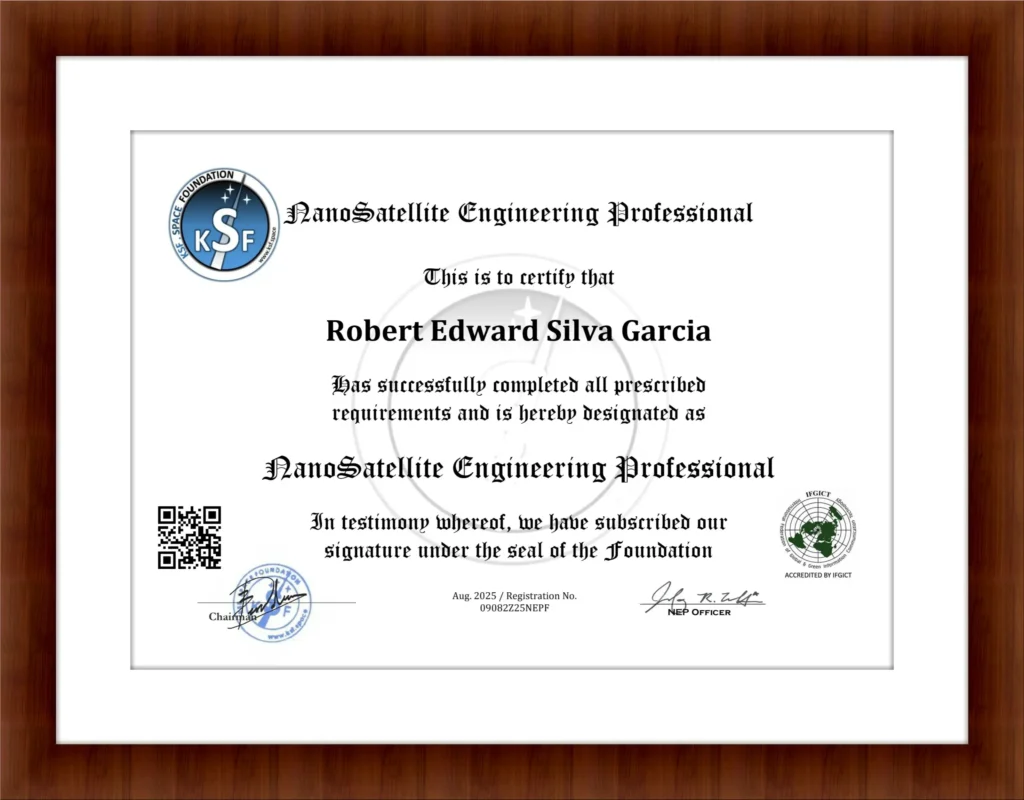
In the rapidly expanding frontier of the NewSpace economy, specialized education has become the launchpad for the next generation of aerospace engineers. One program standing at the forefront of this movement is the cubesat course by KSF Space. As the space industry shifts toward miniaturization and cost-effective orbital access, the demand for skilled professionals who can design, build, and launch nanosatellites has reached an all-time high.
Whether you are a university student, a seasoned engineer, or a tech entrepreneur, the cubesat course offered by KSF Space provides a comprehensive pathway to mastering the complexities of satellite technology.
Why Enroll in a Cubesat Course?
The global satellite market is no longer exclusive to national space agencies with billion-dollar budgets. Today, “NewSpace” is driven by agility, rapid prototyping, and the 1U to 3U standard. Enrolling in a cubesat course is the most effective way to gain the hands-on experience required to navigate this landscape.
The Shift to Nanosatellite Engineering
Traditional aerospace degrees often focus on large-scale systems. However, the cubesat course by KSF Space emphasizes modularity. By learning how to integrate Commercial-Off-The-Shelf (COTS) components into a space-ready frame, students bridge the gap between academic theory and orbital reality.
Mastering the Curriculum: What You’ll Learn at KSF Space
The cubesat course (specifically the Nanosatellite Engineering Professional Certification) is structured into ten intensive chapters. These modules are designed by industry experts from KSF Space to ensure that every participant gains “mission-ready” knowledge.
1. Satellite Architecture and Design
Every cubesat course begins with the “skeleton” of the mission. You will study:
Mechanical Structures: Comparing 6061-T6 Aluminum with advanced PA11 polymers.
Power Systems (EPS): Managing solar arrays and battery discharge cycles.
On-Board Computing (OBC): Programming the brains of the satellite to handle data and telemetry.
2. Space Environment and Survival
The vacuum of Low Earth Orbit (LEO) is unforgiving. A core part of the cubesat course involves understanding thermal management and radiation shielding. KSF Space teaches students how to use Finite Element Analysis (FEA) to ensure the satellite survives the 10G+ vibrations of a rocket launch.
3. Mission Operations and Launch
Building the satellite is only half the battle. This cubesat course covers the regulatory side—frequency filing, orbital debris mitigation, and securing a spot on a rideshare mission.
Career Benefits of a KSF Space Certification
Holding a professional certification from KSF Space is a significant differentiator in the job market. Over 1,700 candidates have successfully completed the cubesat course, many of whom now work at leading firms like SpaceX, Rocket Lab, and various national space research centers.
Industry Recognition: The NEP certification is recognized globally as a standard for nanosatellite competency.
Hands-on Prototyping: Many versions of the cubesat course include access to flight-ready kits.
Networking: Join a global community of “Space Explorers” dedicated to democratizing orbital access.
Frequently Asked Questions (FAQ)
What is a cubesat course?
A cubesat course is a specialized training program that teaches the engineering, design, and operational principles of small satellites (1U to 3U). The program by KSF Space covers everything from structural assembly to launch regulations.
Who should take the KSF Space certification?
The cubesat course is ideal for STEM students, aerospace engineers looking to pivot to NewSpace, and researchers planning their own orbital missions.
How long does it take to complete the training?
The duration varies depending on the mode of study, but most students complete the cubesat course modules within 24 to 40 hours of intensive study.
Is the certificate recognized by space agencies?
Yes, the certification from KSF Space is designed to align with international standards, making it highly respected within the space community.
Can I build a real satellite during the course?
While the basic cubesat course covers the theory and simulation, KSF Space offers bundles that include physical hardware kits for hands-on assembly.
Conclusion: Launch Your Career Today
The barrier to space has never been lower, but the requirement for specialized knowledge has never been higher. By completing the cubesat course from KSF Space, you aren’t just earning a certificate you are gaining the tools to contribute to the future of humanity, more info please contact info@ksf.space