
CEO at 4DBC Group
Nanosatellite Course
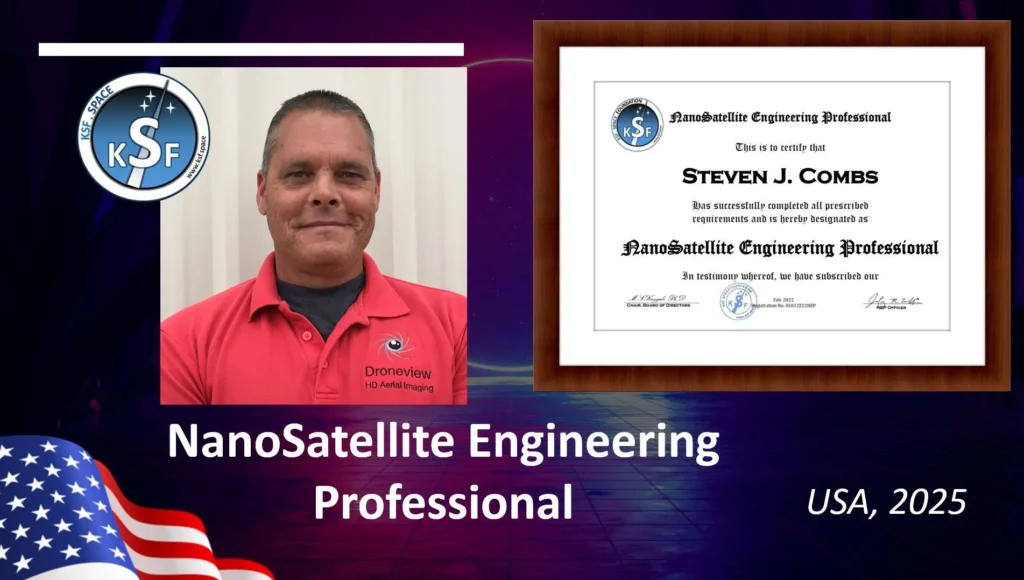
The space industry is no longer reserved for national agencies with billion-dollar budgets. We are currently in the era of “NewSpace,” where miniaturization and cost-effective engineering are democratizing the stars. At the forefront of this revolution is the Nanosatellite Course offered by KSF Space.
Whether you are an aspiring aerospace engineer, a researcher, or a tech professional looking to pivot, understanding nanosatellite technology through a certified Nanosatellite Course is your gateway to the future of global connectivity, Earth observation, and interplanetary exploration.
Why Choose a Nanosatellite Course in the NewSpace Era?
The shift from massive, bus-sized satellites to CubeSats and Nanosatellites has created a massive skills gap. Industry leaders are looking for professionals who understand the lean, agile methodologies of small satellite development.
The Rise of Small Satellite Constellations
Traditional satellites take a decade to build. A Nanosatellite Course teaches you how to design systems that can be deployed in months. These constellations provide:
Global IoT connectivity.
Real-time climate monitoring.
Rapid response disaster management.
Career Opportunities in Aerospace Engineering
By completing a Nanosatellite Course from KSF Space, you position yourself for roles such as Mission Architect, Systems Engineer, or Payload Integration Specialist.
Comprehensive Curriculum: Theoretical Excellence and Professional Certification
The Nanosatellite Course specifically the Nanosatellite Engineering Professional (NEP) Certification—is meticulously designed to cover the entire lifecycle of a space mission. While the core course is a deep-dive into the complex theory and standards required for orbital success, it provides the essential foundation for any practical project.
1. Space Environment and Mission Analysis
Understanding the harsh realities of Low Earth Orbit (LEO) is the first step. In the Nanosatellite Course, you will study thermal vacuum conditions, ionizing radiation, and orbital mechanics to ensure your satellite survives.
2. Satellite Subsystems and Integration
The Nanosatellite Course breaks down the “bus” into manageable modules:
ADCS (Attitude Determination and Control System): Keeping the satellite pointed in the right direction.
EPS (Electrical Power System): Managing solar panels and battery storage.
OBDH (On-Board Data Handling): The “brain” of the satellite.
Telecommunications: S-band and X-band communication links.
3. Standards and Regulatory Policy
A unique aspect of the Nanosatellite Course is its focus on NASA and ESA standards. You will learn about frequency filing, orbital debris mitigation, and the legal framework of international space law.
From Theory to Hardware: The CubeSat Kit Version 2.0
While the Nanosatellite Course provides the world-class theoretical knowledge needed for certification, KSF Space also offers the opportunity to bridge the gap between “knowing” and “building.”
Enhancing Your Studies with the CubeSat Kit 2.0
Students and researchers are encouraged to purchase the CubeSat Kit Version 2.0 to apply the lessons learned in the Nanosatellite Course. This hardware kit is engineered to NASA/ESA standards and includes:
Advanced Structure: 3D-printed (PA11) or Aerospace-grade Aluminum frames.
Integrated PCBs: Five specialized boards including MCU (ESP32-based), Sensors, and Power.
Triple LoRA Support: Multiple frequency modules (433/868/915 MHz) for global compatibility.
Full Power Suite: Solar cell chargers and battery protection circuits.
By combining the Nanosatellite Course theory with the physical assembly of the Version 2.0 kit, you gain a complete understanding of satellite engineering.
Frequently Asked Questions (FAQ)
What is a Nanosatellite?
A nanosatellite is any satellite with a mass between 1kg and 10kg. The most common form factor is the CubeSat (1U, 2U, or 3U).
Is the Nanosatellite Course hands-on?
The core Nanosatellite Course is a professional theoretical certification. However, participants can purchase the CubeSat Kit Version 2.0 from KSF Space to perform hands-on assembly and testing.
Who should enroll in the Nanosatellite Course?
The Nanosatellite Course is ideal for STEM students, faculty members, and engineers looking to enter the NewSpace sector.
Does KSF Space provide launch support?
Yes, KSF Space assists in finding launch options for CubeSats that have successfully met the design and testing standards taught in the Nanosatellite Course.
Contact Information
Ready to launch your career into orbit? Reach out to the experts at KSF Space for more information on enrollment or to inquire about purchasing a hardware kit.
Website: www.ksf.space
Email: info@ksf.space
Course Details: Nanosatellite Course Certification