
CEO at 4DBC Group
Nanosatellite Education by KSF Space
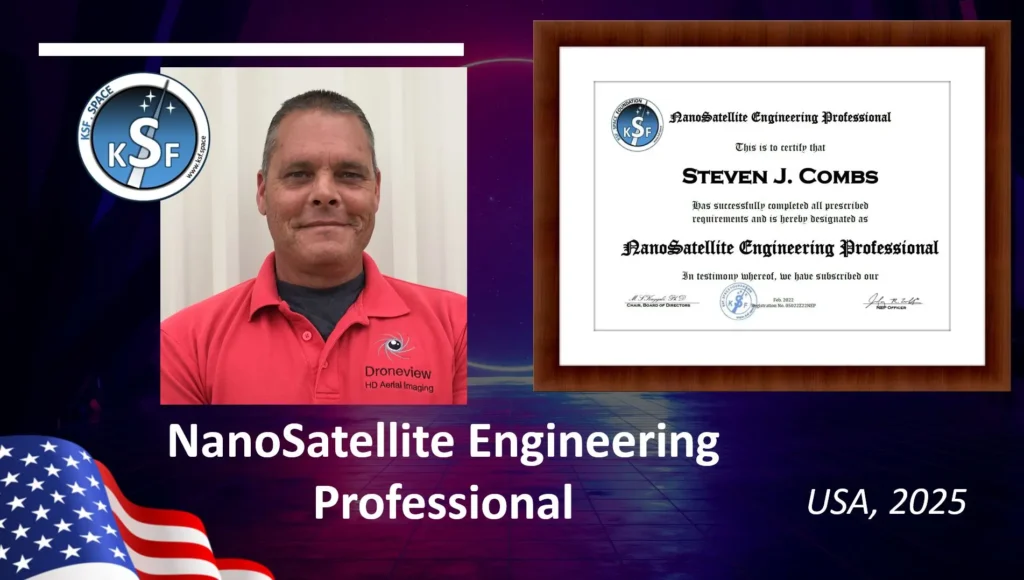
The aerospace industry is undergoing a seismic shift. No longer is space exploration the exclusive playground of superpower nations and billion-dollar government agencies. We have entered the era of “NewSpace,” a period defined by the democratization of the stars through miniaturization, cost-efficiency, and—most importantly—accessible Nanosatellite Education.
At the forefront of this educational revolution is KSF Space, a non-profit foundation dedicated to lowering the barriers to Low Earth Orbit (LEO). Through their specialized programs, they are equipping the next generation of engineers, researchers, and students with the tools to design, build, and launch their own missions.
Why Nanosatellite Education is the Future of Aerospace
The demand for small satellite expertise has never been higher. With thousands of nanosatellites—satellites weighing between 1 kg and 10 kg scheduled for launch in the coming years, the industry is facing a significant skills gap.
Traditional aerospace degrees often focus on legacy systems and massive, bus-sized satellites that take a decade to develop. In contrast, Nanosatellite Education focuses on lean, agile methodologies that allow for mission development in months rather than years.
The Impact of Miniaturization
Nanosatellites, often built using the “CubeSat” standard (10x10x10 cm units), leverage commercial off-the-shelf (COTS) components. This shift has reduced costs by orders of magnitude, making it possible for:
Universities to conduct real-world R&D missions.
Developing Nations to establish their own domestic space programs.
Startups to deploy global IoT and Earth observation constellations.
By investing in Nanosatellite Education, individuals and institutions are not just learning theory; they are gaining the practical skills required to participate in a multi-billion dollar economy.
KSF Space: Leading the Global Standard in Space Training
KSF Space was founded with a singular mission: to enable cost-efficient access to space. Recognizing that hardware alone isn’t enough, they developed the world’s first and only Nanosatellite Engineering Professional (NEP) certification.
This program, steered by members from major space agencies like NASA, ESA, and JAXA, provides a comprehensive curriculum that covers the entire lifecycle of a mission.
The NEP Certification Advantage
The NEP credential is more than just a certificate; it is a global “seal of approval.” Employers in the aerospace sector recognize NEP-certified professionals as having the technical rigor to handle complex orbital projects.
Key components of the program include:
Mission Design: Learning how to define objectives, select orbits (LEO, SSO), and manage launch policy.
Subsystem Integration: Mastering On-Board Data Handling (OBDH), Electrical Power Systems (EPS), and Attitude Determination and Control (ADCS).
Operations and Policy: Understanding frequency filing with the ITU and space debris mitigation standards.
For anyone looking to pivot their career or enhance their academic standing, the Nanosatellite Education provided by KSF Space is the gold standard.
Advanced Hardware and Hands-On Learning
A unique pillar of the Nanosatellite Education ecosystem at KSF Space is the bridge between theoretical knowledge and physical hardware. The foundation offers the world’s most affordable flight-ready CubeSat kits.
Aluminum and Polymer Structures
Students learn the importance of structural integrity under the “Max-Q” phase of launch. KSF Space provides options for:
Aerospace-grade Aluminum (6061-T6): Known for its high strength-to-weight ratio and thermal conductivity.
Advanced PA11 Polymers: A disruptive 3D-printed alternative that is 40% lighter than aluminum, ideal for missions where every gram counts.
By integrating these kits into their Nanosatellite Education, learners can build functional prototypes that meet NASA-GSFC-STD-7000 environmental verification standards.
Frequently Asked Questions (FAQ)
What is Nanosatellite Education?
Nanosatellite Education is a specialized field of study focused on the design, engineering, and operation of satellites weighing less than 10 kg. It combines systems engineering, orbital mechanics, and electronics into a compact, agile framework.
Who should enroll in the NEP program?
The program is ideal for aerospace students, electronics engineers, university researchers, and professionals in the tech industry looking to pivot into the space sector.
Is the KSF Space certification recognized by the industry?
Yes. The NEP certification is globally recognized and was developed by experts with heritage from major space agencies. Over 1,700 candidates have already been certified.
Does the course include a physical satellite?
The core Nanosatellite Education program is a theoretical and technical certification. However, participants have the option to purchase 1U, 2U, or 3U CubeSat hardware kits to gain hands-on experience.
How long does it take to get certified?
The program is self-paced. Most participants complete the curriculum and pass the NEP exam within 3 to 6 months of dedicated study.
Conclusion: Start Your Journey to the Stars
The barrier to space has never been lower, but the requirement for excellence remains paramount. Whether you are a student aiming for a career at SpaceX or a university looking to launch its first research payload, the right foundation is essential.
Through the Nanosatellite Education initiatives at KSF Space, you aren’t just earning a credential—you are joining a global community of pioneers.
Contact Information
For enrollment inquiries, institutional partnerships, or hardware kits, please reach out to the KSF Space administration:
Official Website: www.ksf.space
Email: info@ksf.space