
CEO at 4DBC Group
Nanosatellite Training: Launching Your Career with KSF Space
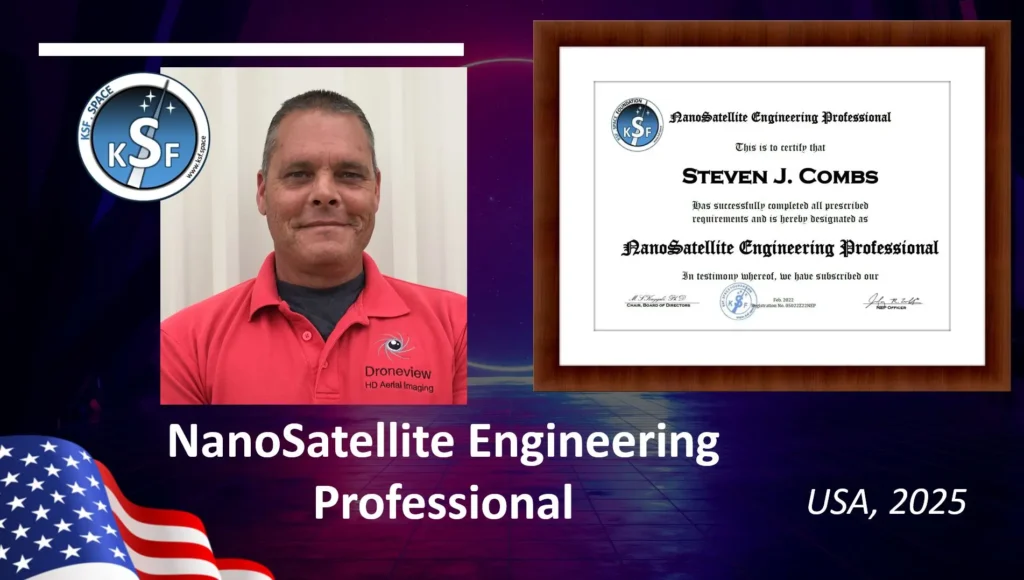
The “NewSpace” era has arrived, and it is smaller, faster, and more accessible than ever before. Gone are the days when space exploration was exclusively the playground of government giants with multibillion-dollar budgets. Today, the revolution is driven by miniaturization, and the most critical asset in this new frontier isn’t just hardware it’s specialized knowledge.
This is where Nanosatellite Training by KSF Space comes into play. As a global leader in space education and democratized orbital access, KSF Space provides the world’s most comprehensive pathway for engineers, students, and researchers to master the complexities of small satellite engineering.
In this exhaustive guide, we will dive deep into why Nanosatellite Training is the essential credential for the modern aerospace professional and how you can transition from theoretical knowledge to orbital reality.
What is Nanosatellite Training and Why Does It Matter Today?
To understand the value of Nanosatellite Training, we first need to look at the massive shift in the satellite industry. A nanosatellite is typically defined as any satellite with a mass between 1 kg and 10 kg. The most famous form factor is the CubeSat, built in 10 cm units (1U, 2U, 3U, etc.).
The Skills Gap in the NewSpace Economy
While traditional aerospace degrees focus on massive, bus-sized satellites that take a decade to build, the private sector is moving toward “agile space.” Companies like SpaceX, Planet, and Rocket Lab need professionals who can design, test, and launch constellations in months, not years.
Nanosatellite Training bridges this gap. It provides the specific “lean engineering” skills required to work with Commercial-Off-The-Shelf (COTS) components while maintaining the high reliability required for the vacuum of space.
Democratizing Access to the Stars
KSF Space was founded as a non-profit organization with a singular mission: to make space accessible. By offering affordable Nanosatellite Training, they empower developing nations, small universities, and independent startups to participate in the global space economy.
Mastering the Curriculum: Inside the NEP Certification
The gold standard for Nanosatellite Training at KSF Space is the Nanosatellite Engineering Professional (NEP) certification. This program is not just a course; it is a professional designation recognized by major space agencies and private corporations.
The curriculum is divided into ten intensive chapters that cover the entire mission lifecycle:
1. Mission Analysis and Orbital Mechanics
Every mission starts with a “why.” In this module of the Nanosatellite Training, you learn to define mission requirements and select the optimal orbit (such as Sun-Synchronous Orbit or Low Earth Orbit) to meet your scientific or commercial goals.
2. Space Environment and Survival
Space is trying to kill your electronics. You will study:
Thermal Vacuum Effects: How to manage heat when there is no air for convection.
Radiation Hardening: Protecting your “brain” (OBC) from high-energy particles.
Outgassing: Selecting materials that won’t release gases that fog your camera lenses.
3. Satellite Subsystems (The “Bus”)
This core pillar of Nanosatellite Training breaks down the internal architecture of a satellite:
EPS (Electrical Power System): Solar panel integration and battery management.
OBDH (On-Board Data Handling): Using powerful microcontrollers like the ESP32 for satellite logic.
ADCS (Attitude Determination and Control System): Using magnetorquers and reaction wheels to keep your satellite pointed in the right direction.
4. Telecommunications and Link Budgets
Learn the physics of sending data through the atmosphere. The training covers S-Band, X-Band, and the revolutionary use of LoRA (Long Range) modules for low-power satellite communication.
5. Assembly, Integration, and Testing (AIT)
Before a satellite is allowed on a rocket, it must pass rigorous tests. You will learn the theory behind vibration testing (surviving the 10G+ forces of launch) and thermal cycling.
From Theory to Hardware: The CubeSat Kit Version 2.0
While the Nanosatellite Training from KSF Space is a world-class theoretical certification, the foundation recognizes that true mastery comes from physical application.
To support this, KSF Space offers the CubeSat Kit Version 2.0. This hardware is specifically designed to align with the lessons in the Nanosatellite Training.
Why the Version 2.0 Kit is a Game Changer
Modular Design: It features five specialized PCBs, including a dedicated Communication board with triple LoRA modules (433/868/915 MHz).
Flight-Ready Structures: Unlike “toy” kits, KSF’s frames are available in Aerospace-grade 7075 Aluminum or high-performance PA11 Polymer, meeting NASA-GSFC-STD-7000 standards.
Open Architecture: It uses an ESP32-based MCU, allowing students to use familiar coding environments while learning professional satellite logic.
By combining Nanosatellite Training with the Version 2.0 kit, universities can build a functional satellite lab for a fraction of the cost of traditional aerospace equipment.
Career Impact: How Nanosatellite Training Changes Your Future
Is the Nanosatellite Training worth the investment? With over 1,700 graduates worldwide, the data says yes.
Global Recognition
The NEP certification provided through KSF Space‘s Nanosatellite Training is recognized by international space agencies and foundations. It acts as a “passport” to the NewSpace industry, signaling to employers that you understand the specialized standards (like GEVS) required for orbital hardware.
Salary and Opportunity
Professionals with specialized Nanosatellite Training often command higher salaries due to the scarcity of these skills. Graduates have gone on to work at:
Commercial launch providers.
IoT and Earth observation startups.
National defense and research laboratories.
Networking with the ISS
A unique benefit of training with KSF Space is the opportunity to participate in programs that interact with the International Space Station (ISS), providing a level of prestige that few other online courses can offer.
Frequently Asked Questions (FAQ)
1. Is the Nanosatellite Training online or in-person?
The core Nanosatellite Training (NEP Certification) is an online, self-paced program. This allows professionals and students from all over the world to access high-quality space education without the need for expensive travel.
2. Do I need an engineering degree to start?
While the NEP level of Nanosatellite Training is geared toward those with a STEM background, KSF Space also offers the NTP (Nanosatellite Technical Professional) track for vocational students and newcomers.
3. Does the training include the CubeSat hardware?
The Nanosatellite Training itself is a theoretical certification program. However, the CubeSat Kit Version 2.0 can be purchased separately to provide the hands-on component for labs and individual study.
4. How long does it take to get certified?
Most students complete the Nanosatellite Training modules and pass the final examination within 2 to 4 months, depending on their pace.
5. Is the certification recognized by NASA or ESA?
The curriculum of the Nanosatellite Training is designed to meet the rigorous environmental and engineering standards set by NASA and ESA, making it highly respected within the industry.
Ready to Launch? Contact KSF Space Today
The stars have never been closer. By enrolling in Nanosatellite Training, you are not just taking a course; you are joining a global community of innovators dedicated to the future of humanity in space.
Whether you are a university looking to launch its first mission, or an engineer ready to level up your career, KSF Space has the tools and the training to get you there.
Contact Information
Website: www.ksf.space
Official Course Link: Nanosatellite Engineering Professional Certification
Email Support: info@ksf.space
Take the first step toward your career in orbit. Enroll in Nanosatellite Training today.