
CEO at 4DBC Group
Small Satellite "SmallSat" Education
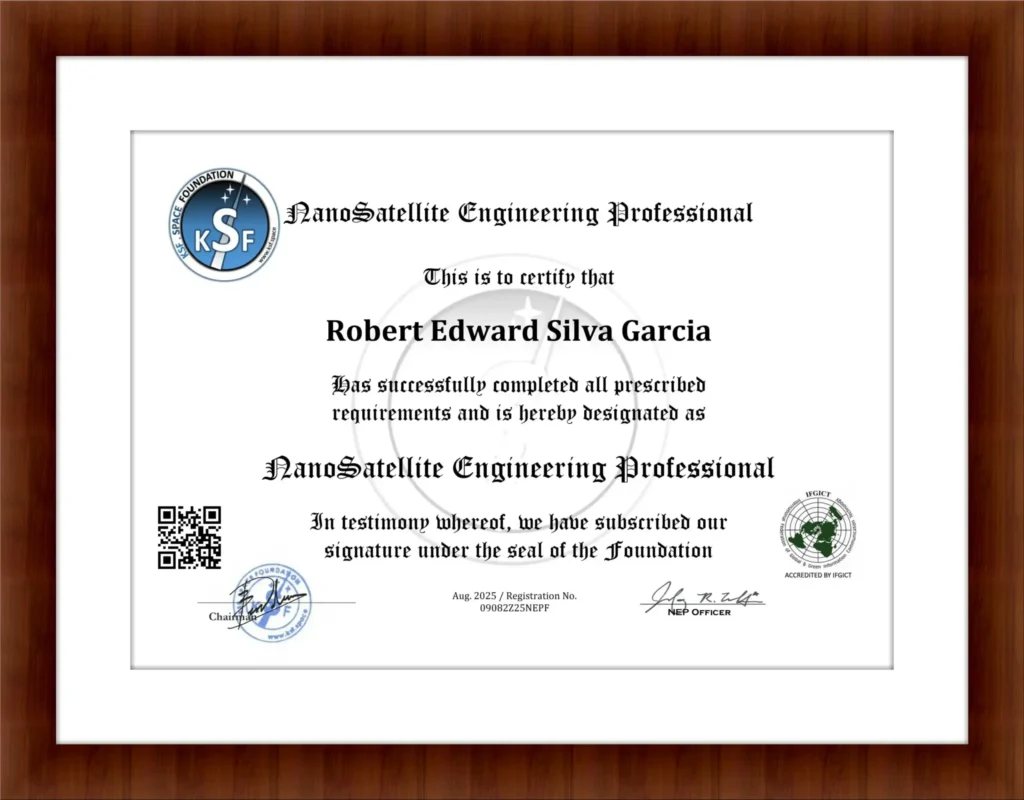
In 2026, the NewSpace economy is no longer a distant dream—it is a thriving marketplace where agility and miniaturization have replaced the billion-dollar behemoths of the past.1 As we look toward the stars, the demand for specialized talent has never been higher. For students, researchers, and professional engineers, Small Satellite “SmallSat” Education by KSF Space serves as the ultimate catalyst for career transformation.
By integrating rigorous academic standards with the practical realities of orbital deployment, KSF Space has established a global ecosystem designed to democratize access to Low Earth Orbit (LEO).
Empowering the Next Generation: A Deep Dive into Small Satellite “SmallSat” Education by KSF Space
The shift toward nanosatellites and CubeSats has fundamentally changed how we approach aerospace engineering. Traditional education often lags behind the rapid technological cycles of the private space sector. Small Satellite “SmallSat” Education bridges this gap by offering a curriculum that is both comprehensive and “flight-ready.”
At the heart of this initiative is the Nanosatellite Engineering Professional (NEP) program. This is not just a course; it is a professional development roadmap that equips participants with the skills to design, integrate, and manage complex missions from inception to de-orbiting.
The Pillars of Modern Small Satellite “SmallSat” Education
To succeed in the modern space industry, one must master more than just physics. Effective Small Satellite “SmallSat” Education requires a multi-disciplinary approach that covers mechanical engineering, telecommunications, and international regulatory law.
1. Mission Architecture and Orbital Planning
Every successful mission begins with a clearly defined “why.” Through Small Satellite “SmallSat” Education, students learn how to translate a scientific or commercial objective into a technical mission profile. This includes:
Orbit Determination: Choosing between Sun-Synchronous Orbits (SSO) for imaging or LEO for low-latency IoT.
Launch Logistics: Understanding how to secure a “rideshare” slot on commercial rockets like those from SpaceX or Rocket Lab.
Keplerian Mechanics: Mastering the mathematical foundations of orbital motion.8
2. Spacecraft Subsystems: The Architecture of Excellence
A SmallSat is a highly integrated “system of systems.” A core focus of Small Satellite “SmallSat” Education is teaching the synergy between different satellite buses:
Electrical Power System (EPS): Designing solar arrays and battery protection units that survive extreme thermal cycles.
On-Board Data Handling (OBDH): Utilizing modern microcontrollers, such as the ESP32, to manage data processing.
ADCS (Attitude Determination and Control): Implementing magnetorquers and sun sensors to ensure the satellite maintains precise pointing.
Technical Rigor: Why This Program Sets the Industry Standard
What sets the Small Satellite “SmallSat” Education by KSF Space apart is its strict adherence to international standards. In 2026, mission success is often determined by the ability to pass the General Environmental Verification Standard (GEVS).
Survival in the Vacuum: Thermal and Radiation Shielding
Space is an unforgiving environment. Small Satellite “SmallSat” Education provides students with the tools to mitigate the risks of ionizing radiation and thermal extremes. Participants study outgassing prevention and material selection, learning why aerospace-grade 7075 aluminum or advanced PA11 polymers are the materials of choice for orbital structures.13
Compliance and Policy: Navigating Space Law
Launching a satellite is as much a legal challenge as it is an engineering one. The Small Satellite “SmallSat” Education curriculum includes critical training on:
Frequency Filing: Coordinating with the ITU and national agencies to prevent signal interference.
Debris Mitigation: Developing “End-of-Life” (EOL) strategies to comply with modern 5-year de-orbit regulations.
Space Sustainability: Understanding the ethical considerations of orbital congestion.
Hardware Synergy: Learning by Doing
While the Small Satellite “SmallSat” Education program is primarily a knowledge-based certification, KSF Space facilitates a hands-on transition through their CubeSat kits.
The Educational CubeSat Kit Version 2.0
To augment Small Satellite “SmallSat” Education, the foundation offers a flight-ready hardware platform. This allows universities and research labs to:
Assemble the physical structure of a 1U, 2U, or 3U satellite.
Integrate LoRA-based communication modules for ground-station testing.
Perform vibration and thermal vacuum simulations based on the NEP curriculum guidelines.
Flight Heritage and Testing
One of the most significant benefits of Small Satellite “SmallSat” Education is the connection to KSF Space’s suborbital and “near-space” launch services. Certified individuals gain an insider’s view of the testing and integration phase, moving their projects from the classroom to the edge of space.
Career Impact: The ROI of Specialized Training
In a field as competitive as aerospace, a general engineering degree is often just the baseline. The Small Satellite “SmallSat” Education provided by KSF Space acts as a specialized credential that signals your “flight readiness” to global employers.
| Feature | Educational Benefit | Professional Impact |
|---|---|---|
| Curriculum | 10 intensive chapters on space systems. | Immediate technical proficiency. |
| Validation | Rigorous NEP Certification exam. | Globally recognized credential. |
| Hardware | Access to 3D-printed and aluminum kits. | Hands-on mission experience. |
| Network | Community of 1,700+ space experts. | Connection to SpaceX / ESA veterans. |
Frequently Asked Questions (FAQ)
Q: Who is the ideal candidate for Small Satellite “SmallSat” Education?
A: This program is designed for undergraduate and graduate students in STEM, mid-career professionals looking to pivot into space, and academic instructors wanting to bring satellite technology into their classrooms.18
Q: Is the Small Satellite “SmallSat” Education program available online?
A: Yes. The curriculum is delivered via a self-paced, online learning management system, making it accessible to anyone with an internet connection, anywhere in the world.19
Q: Does the program provide launch assistance?
A: KSF Space is a non-profit foundation that works with international launch providers to source affordable rideshare opportunities for educational missions.
Q: What is the primary difference between the NEP and standard engineering courses?
A: Standard courses focus on theory. Small Satellite “SmallSat” Education focuses on mission success, teaching you how to build hardware that actually survives and functions in orbit.
Contact KSF Space
Ready to take your first step toward orbit? The team at KSF Space is ready to help you navigate the future of aerospace.
Email: info@ksf.space
Official Website: www.ksf.space
Enrollment Portal: NEP “SmallSat” Education
By choosing NEP “SmallSat” Education, you aren’t just learning; you are launching. Join the ranks of certified professionals who are building the infrastructure of the stars.