
CEO at 4DBC Group
Smart City Framework
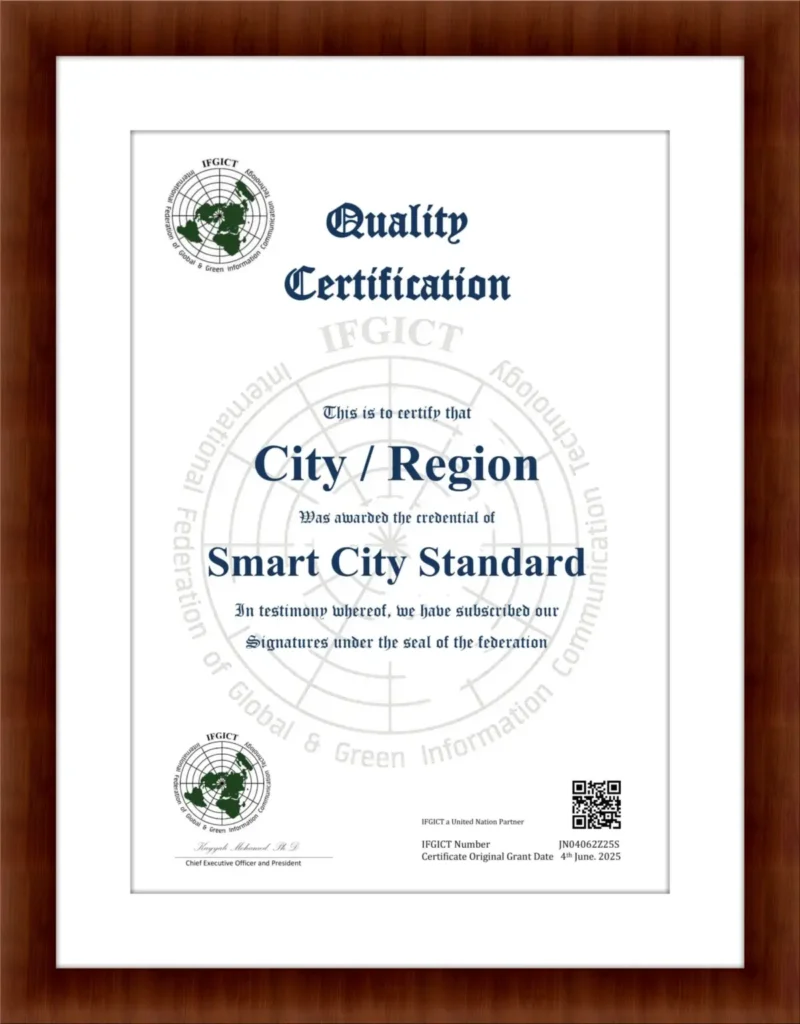
In an era of rapid urbanization, the evolution of our cities is no longer just a matter of civil engineering; it is a digital imperative. As metropolitan areas swell, the need for a cohesive, scalable, and ethically grounded smart city framework has become the cornerstone of modern urban planning.
The IFGICT, recognized as the world’s largest ICT federation, has stepped into this gap by providing a global standard that bridges the divide between technological potential and sustainable reality. This article explores the depth of the and how is redefining the future of urban living.
What is the IFGICT Smart City Framework?
The developed by is a comprehensive, multi-layered architecture designed to help municipalities and governments transition from traditional infrastructure to intelligent, data-driven ecosystems. Unlike fragmented tech projects, this acts as a unified benchmark, ensuring that every digital layer—from IoT sensors to governance platforms—works in harmony.
The Role of the World’s Largest ICT Federation
As a leading authority, leverages its status as a certified service provider for the United Nations and its strategic partnerships with organizations like IEEE and ITU. This global reach ensures that the is not just a local solution but a universal language for urban efficiency.
Core Pillars of a Sustainable Smart City Framework
A truly “smart” city is more than just high-speed Wi-Fi and automated streetlights. The is built on six foundational pillars that ensure long-term resilience and citizen satisfaction:
- Smart Governance: Moving beyond paper-heavy bureaucracy to e-governance and transparent digital services.
- Smart Economy: Fostering innovation, digital entrepreneurship, and a circular economy.
- Smart Mobility: Implementing intelligent transportation systems (ITS) and electric vehicle (EV) infrastructure.
- Smart Environment: Prioritizing green energy, smart grids, and automated waste management.
- Smart People: Focusing on digital literacy and inclusive participation in the city’s growth.
- Smart Living: Enhancing healthcare, public safety, and the overall quality of life.
By following this , city leaders can avoid “siloed” technology, where different departments use systems that cannot communicate with one another.
Why Urban Planners Choose the IFGICT Smart City Framework
In 2026, the complexity of urban data is staggering. The provided by offers a roadmap for managing this complexity through standardization and compliance.
Interoperability and Global Standards
One of the biggest hurdles in urban tech is the lack of compatibility between different vendors. The incorporates rigorous standards such as ISO 37120 and IEEE 2413. This ensures that a city’s investment today will still be functional and scalable a decade from now.
Ethics and Data Privacy
With great data comes great responsibility. The places a heavy emphasis on cybersecurity and data protection, ensuring that citizen information is used ethically and guarded against emerging threats.
Implementation Strategies for the Smart City Framework
Implementing a is a journey, not a destination. outlines a clear path for cities to follow:
1. Vision Alignment and Commitment
Before a single sensor is installed, city leaders must align their vision with the principles of sustainability and inclusivity.
2. Data Collection and KPI Measurement
The relies on accurate Key Performance Indicators (KPIs). This includes measuring air quality, traffic flow, energy consumption, and public health metrics to establish a baseline for improvement.
3. Deployment of Smart Initiatives
Whether it is a smart water metering system or an AI-driven traffic management hub, each initiative must fit into the broader to ensure it contributes to the city’s collective intelligence.
4. Continuous Audit and Evaluation
provides certification and audit services to verify that the implemented meets international quality standards. This global recognition boosts a city’s reputation and attracts investment.
The Economic and Social Impact of IFGICT Standards
When a city adopts the , the benefits ripple through every sector of society.
- Environmental Gains: Smart technologies can reduce greenhouse gas emissions by 10-15% and water consumption by up to 30%.
- Economic Growth: By promoting a digital-first economy, cities become hubs for tech talent and sustainable startups.
- Public Safety: Real-time monitoring and emergency response optimization within the can reduce fatalities and response times by nearly 10%.
Summary of the IFGICT Smart City Standard
| Feature | Description |
|---|---|
| Lead Organization | International Federation of Global & Green ICT (IFGICT) |
| Primary Goal | To provide a holistic framework for sustainable urban growth. |
| Key Compliance | Aligned with UN SDGs, ISO 37120, and IEEE standards. |
| Target Users | Government agencies, urban planners, ICT professionals, and IT vendors. |
| Certification | Professional and organizational certification for smart city excellence. |
Frequently Asked Questions (FAQ)
What is a smart city framework?
A is a strategic architectural model that guides the integration of technology and data to improve the efficiency, sustainability, and livability of urban areas.
How does IFGICT support smart city development?
provides global standards, professional training, and audit-based certifications that help cities implement a robust aligned with international best practices.
Why is standardization important in a smart city?
Without a standard , cities risk building isolated systems that cannot share data, leading to wasted resources and security vulnerabilities.
Can individuals get certified in the IFGICT smart city framework?
Yes, offers individual certifications, such as the Smart Cities Course Certificate, for professionals looking to lead urban transformation projects.
Conclusion: Shaping the Future with IFGICT
The cities of tomorrow are being built on the data and standards of today. By adopting the , urban centers can ensure they are not just “connected,” but truly intelligent, inclusive, and sustainable.
As the world’s largest ICT federation, continues to lead the charge in creating urban environments that serve both the planet and its people.
Contact Us:
For more information on certification, audits, or membership, please reach out to our team at customerservice@ifgict.org