
CEO at 4DBC Group
Redefining Orbit: The World’s Most Affordable 16U CubeSat Structure for Modern Space Missions by KSF Space
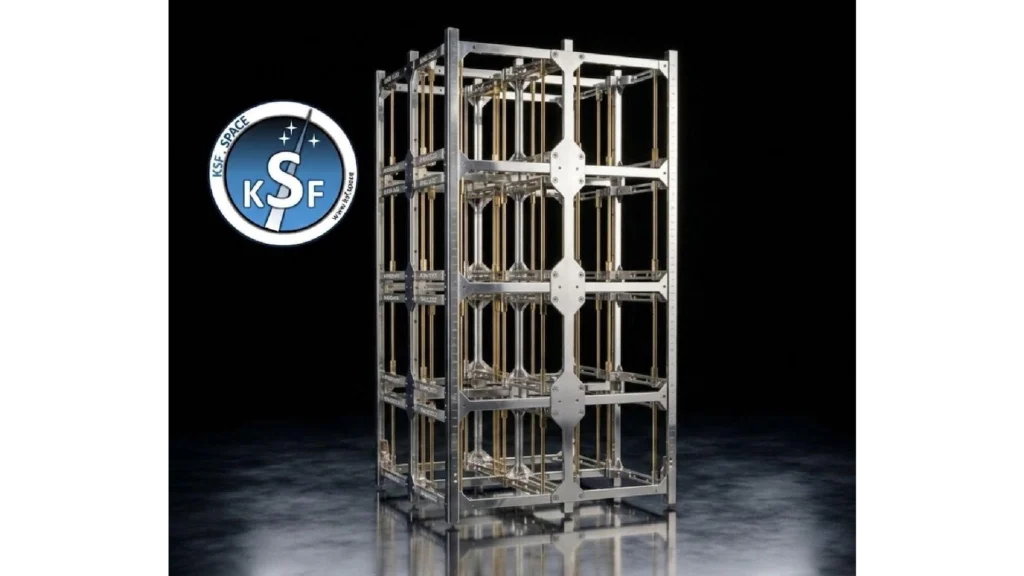
In the rapidly evolving landscape of NewSpace, the barrier to entry has traditionally been the high cost of reliable hardware. However, as the demand for more complex payloads grows, the industry is shifting toward larger form factors that offer better power generation and payload volume. Leading this shift is the 16U CubeSat structure from KSF Space, a non-profit organization dedicated to democratizing access to space.
By combining rigorous engineering with a cost-effective manufacturing model, KSF Space has developed what is currently recognized as the most affordable 16U CubeSat structure available globally. This article explores how this specific nanosatellite structure frame is enabling universities, research institutions, and private startups to build your satellite without the prohibitive price tags of the past.
Why the 16U CubeSat Structure is the New Industry Standard
For years, the 1U, 2U, and 3U configurations were the “bread and butter” of the nanosatellite world. They provided a low-risk entry point for technology demonstration. However, as mission objectives become more ambitious—involving high-resolution Earth observation, inter-satellite links, and complex biological experiments—the need for a larger cubesat structure has become evident.
Scaling Up Without Breaking the Bank
The 16U CubeSat structure offers a unique middle ground. It provides significantly more volume than a 6U or 12U frame, allowing for larger deployable solar arrays and more sophisticated propulsion systems. Despite its size, KSF Space has optimized the design of their 16U frame to ensure it remains lightweight yet structurally sound, adhering to the strict requirements of rideshare mission providers.
Precision Engineering Meets Affordability
When you decide to build your satellite, the frame is your foundation. A low-quality cubesat frame can lead to mission failure during the high-vibration environment of a launch. KSF Space utilizes high-grade aerospace aluminum to ensure that their 16U and 24U structures provide the necessary thermal conductivity and structural rigidity while maintaining a price point that is accessible to emerging space nations and academic labs.
Technical Specifications: The Anatomy of the 16U Frame
Understanding the technical nuances of the 16U CubeSat structure is vital for mission success. Unlike smaller 1U or 3U units, a 16U configuration requires advanced load-bearing calculations to protect internal electronics.
Key Features of the KSF Space 16U Frame:
-
Material: High-strength 6061-T6 aluminum (or equivalent aerospace-grade alloy).
-
Modular Design: Optimized for easy integration, allowing teams to customize structure layouts based on specific payload requirements.
-
Mass Efficiency: Designed to maximize the mass-to-volume ratio, ensuring you can pack more into your payload without exceeding launch weight limits.
-
Surface Treatment: Hard-anodized coating to prevent cold-welding in the vacuum of space and to provide enhanced thermal control.
Flight Heritage and Reliability
One of the most critical factors in selecting a nanosatellite structure frame is flight heritage. KSF Space boasts a robust history of flight references. Their structures have been utilized in various missions, providing peace of mind to engineers that the frame can withstand the G-forces and acoustic vibrations of a rocket launch. This “flight-proven” status is a primary reason why the KSF Space 16U CubeSat structure is a top choice for those ready for their space mission.
Versatility Across the CubeSat Spectrum
While the 16U is a powerhouse, KSF Space provides a comprehensive range of structures to fit every mission profile. Whether you are starting small or aiming for a large constellation, the modularity of their designs remains consistent.
From 1U to 24U: A Scalable Ecosystem
-
Small Scale (1U, 2U, 3U): Ideal for educational outreach and simple sensor testing. These frames are the entry point for students learning to build your satellite.
-
Mid-Range (6U, 12U): These are becoming the standard for commercial IoT and remote sensing constellations.
-
Large Scale (16U, 24U): The 16U CubeSat structure and its larger 24U counterpart are designed for missions that were previously reserved for much larger, more expensive microsatellites.
The Power of the Customize Structure Approach
Every mission is unique. Sometimes a standard off-the-shelf cubesat frame isn’t enough. KSF Space offers the ability to customize structure components. This includes custom mounting points for specialized cameras, internal bracing for heavy batteries, or specific apertures for communication antennas.
How KSF Space Lowers the Cost of Space Exploration
How can KSF Space offer the most affordable 16U CubeSat structure in the world? The answer lies in their organizational mission. As a non-profit, the focus is on global capacity building rather than high profit margins.
Supporting Universities and Research
KSF Space works closely with educational institutions to provide not just the cubesat structure, but also the knowledge needed to integrate it. By reducing the cost of the nanosatellite structure frame, they allow universities to allocate more of their budget toward high-quality scientific instruments and payload development.
Ready for Your Space Mission
Choosing the KSF Space 16U means receiving a frame that is “launch-ready.” This includes compatibility with major deployers (like those used on SpaceX rideshares or other international launchers). With a supplier available to arrange a rideshare mission every four months, the timeline from purchasing your 16U CubeSat structure to seeing it in orbit is shorter than ever.
Future-Proofing with the 16U and 24U Form Factors
As AI and edge computing become integrated into satellite hardware, the power requirements are skyrocketing. A 16U CubeSat structure provides the surface area needed for the advanced solar cells required to power high-performance AI chips.
KSF Space is at the forefront of this integration, ensuring that their cubesat frame designs are compatible with modern power systems and thermal management solutions. By opting for a 16U or 24U frame, mission designers are future-proofing their projects against the rapid pace of technological advancement.
Conclusion: Take Your Payload to Orbit with KSF Space
The dream of launching a sophisticated satellite is no longer restricted by million-dollar hardware costs. The 16U CubeSat structure from KSF Space represents a breakthrough in affordability, reliability, and scalability. Whether you are developing a 1U educational tool or a 24U commercial platform, the commitment to quality remains the same.
If you are ready to build your satellite, the first step is choosing a foundation that won’t fail. With proven flight heritage and a design optimized for the modern space environment, KSF Space is the partner you need to reach the stars.
Frequently Asked Questions (FAQ)
1. Why is the 16U CubeSat structure better than a 12U? The 16U provides roughly 33% more volume, allowing for more significant payload capacity and better power generation through larger surface areas for solar panels, without a massive jump in launch costs.
2. Is the KSF Space 16U frame compatible with all launchers? Yes, the KSF Space 16U CubeSat structure is designed to meet standard CubeSat Design Specifications (CDS), making it compatible with major deployer systems used by SpaceX, ISRO, and others.
3. Can I customize the internal layout of my 16U frame? Absolutely. KSF Space allows you to customize structure elements to ensure your specific payload, whether it’s an optical sensor or a propulsion unit, fits perfectly and is securely mounted.
4. What materials are used in the nanosatellite structure frame? KSF Space primarily uses aerospace-grade aluminum alloys, which offer an excellent balance of strength, lightweight properties, and thermal conductivity.
5. How do I start my mission with KSF Space? You can visit www.ksf.space to view their catalog of 1U, 3U, 6U, 12U, 16U, and 24U frames and contact their team for mission support and rideshare opportunities.
References
-
CubeSat Design Specification Rev. 14.1, The CubeSat Program, CalPoly.
-
“The Rise of Nanosatellites,” International Federation of Global & Green ICT (IFGICT).
-
“Structural Analysis of Aluminum CubeSat Frames,” KSF Space Engineering Series 2025.
-
“Rideshare Missions: A New Era for SmallSats,” Journal of Space Exploration.